
Views: 0 Author: Site Editor Publish Time: 2025-11-12 Origin: Site
When you’re looking to buy plastic extrusion machinery or launch a production line, two questions are front and centre: “What is an extruder?” and “How to set up an extruder?” In this comprehensive guide, we’ll walk you through both — in plain English, yet with the technical depth you need — and show why partnering with a trusted brand like Bkwell Machinery makes a difference.
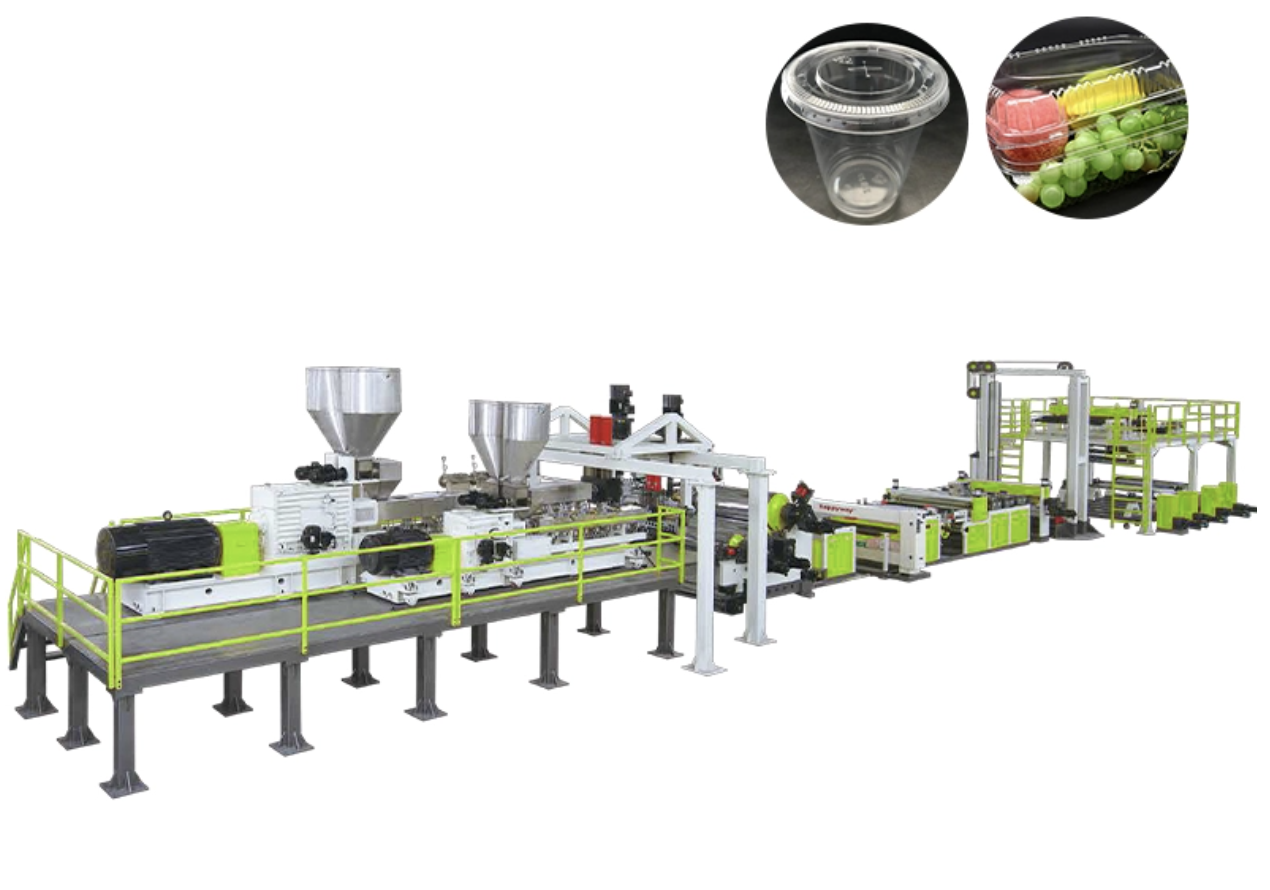
Extrusion is one of the most widely used production methods in plastics, rubber, food, and even metal industries. An extruder essentially melts and pushes material through a shaped die to form continuous profiles (pipes, sheets, films, profiles) with consistent cross-section and performance.
For a buyer or decision-maker considering new extrusion equipment, knowing what the machine does — and how it’s set up — is vital. The right setup affects product quality, throughput, energy use, and long-term service cost.
With that in mind, let’s first clarify exactly what an extruder is.
An extruder machine is a piece of equipment that receives raw material (often granules, powders, or pellets), melts or softens it, and forces it through a die to produce a continuous shape.
In plastics, for example, this continuous shape might be a pipe, a sheet, a profile, or film. The extruder provides the mechanical force (via a screw), thermal energy (via heaters), and shaping (via a die) to turn raw material into a usable product.
Here’s how the extrusion process works step by step:
Feeding – Raw material is loaded into the hopper and enters the barrel.
Melting/Plasticizing – As the screw rotates within the barrel, the material is conveyed forward, compressed, heated, melted and homogenized.
Shaping – The melt is forced through a die with a specified cross-section and exits as a continuous strand, sheet or profile.
Cooling & Finishing – The extruded product is cooled and solidified, cut or collected downstream. Auxiliary equipment plays a role here.
So in essence: What is an extruder? It’s the heart of a continuous production line that turns raw material into shaped product. And how to set up an extruder? That means configuring all those components and parameters so the machine runs reliably and efficiently. We’ll dive into that shortly.
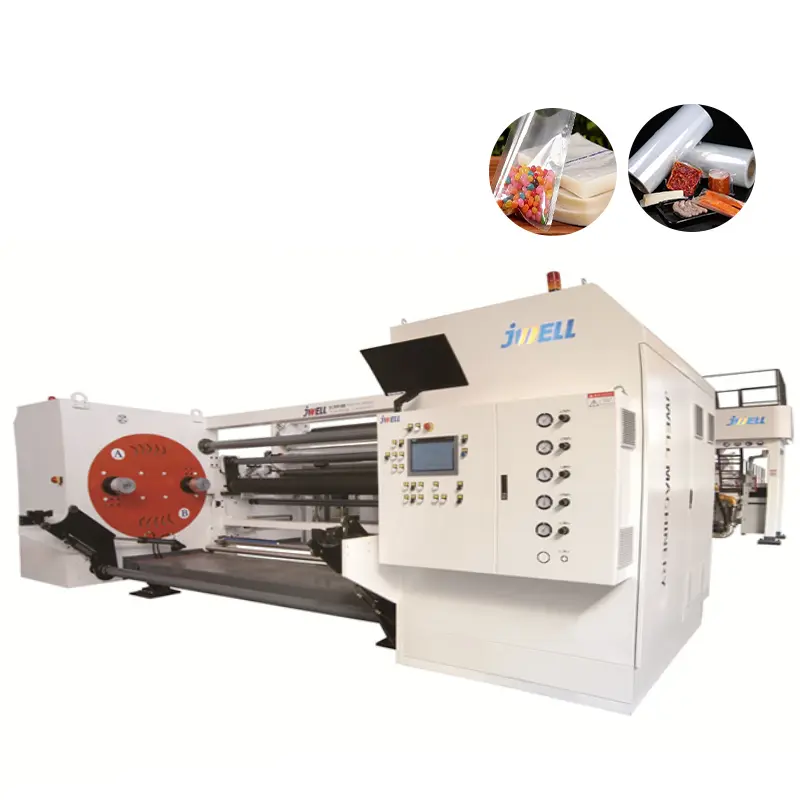
For someone purchasing an extrusion machine, understanding the key components is crucial — because each affects cost, capability, maintenance and output quality.
The hopper and feed throat bring the material into the barrel. For better performance you want a consistent feed, ideally dried and free of contamination, because variations here affect downstream melting and extrusion quality.
Often described as the heart of the extruder:
The screw rotates and conveys material, compressing and melting it. Its geometry (length/diameter ratio, channel depth, flight design) is critical.
The barrel surrounds the screw and contains heating zones plus cooling as needed. The screw and barrel must work as a system.
This determines the final shape of the product. Good die design ensures uniform wall thickness, proper melt flow and minimal defects. It’s important to invest in high-quality tooling when you care about product precision.
After the melt leaves the die, it needs to be cooled, fixed in shape and often cut/measured. Auxiliary equipment such as haul-offs, vacuum sizing tanks, cooling tanks and cutters all matter.
This is the most common and cost-effective type for many straightforward plastic extrusion applications. Simpler design, easier to maintain, lower cost. Good when you process standard materials and don’t need ultra-high mixing or compounding.
Offers enhanced mixing, compounding, processing of filled or recycled materials. According to industry sources, twin-screw machines allow for better homogenization, higher output and more flexibility.
When you process more demanding materials, look into twin-screw.
If your product is basic (standard PVC/PE pipe, profile) → single screw may be fine.
If you’re dealing with filled compounds, recycling, high mix content or need high uniformity → consider twin screw.
Also evaluate cost, maintenance, spare parts, and who will service the equipment.
Now we’ll answer the second part: how to set up an extruder. For a machinery buyer, setting up means: installing, configuring, starting, optimizing and maintaining. Here's a step-by-step guide in user-friendly language.
Before you turn the machine on:
Verify the specifications of the material you will process (type, moisture content, fillers).
Inspect machine: screw, barrel, die, feeding system, safety devices.
Check utilities: power supply, heaters, cooling system (water/air), vacuum if needed.
Ensure raw material is dried (if required) to prevent moisture-related defects.
Temperature is one of the most important aspects of extruder setup. Improper temperatures lead to poor melt, degradation, inconsistent output.
Identify the temperature zones: feed zone, compression zone, metering zone, die zone.
For common engineering plastics, refer to manufacturer recommendations. For example: for PC, PMMA, PA, PET, PVC materials.
Adjust and monitor. Avoid overheating (causes discoloration) and under‐heating (causes poor flow).
Make sure melt pressure at the die is within acceptable range — too high may mean blockage or excessive shear; too low may mean insufficient throughput.
Set feed rate so the machine is not overloaded and can maintain steady state.
Use proper screw speed and die size for your desired output.
Screw RPM affects output, melt quality and temperature. Higher speed can mean higher throughput — but also more shear, more heat and perhaps more wear.
Adjust speed based on material properties and downstream equipment capacity.
After the melt exits the die, set up cooling (water tank, vacuum sizing) so that the product solidifies properly without distortion.
Ensure downstream equipment (puller, cutter) is synchronized with extruder speed to maintain consistent size and shape.
Ensure the die is properly mounted, aligned, and adjusted.
Check for uniform wall thickness, consistent dimensions.
Fine‐tuning at this stage improves final product quality.
Run trial production runs, monitor output for defects (voids, bubbles, warpage, inconsistent thickness).
Adjust parameters: temperature zones, screw speed, die gap, feed rate.
Implement monitoring systems to ensure long term stability.
Choosing the right screw and machine setup isn’t guesswork — it’s precision. Each plastic behaves differently when heated and sheared, so your extruder must match the material’s flow, melting point, and stability. Get this right, and you’ll have a smooth, efficient process. Miss it, and you’ll face poor melting, color streaks, or even machine damage. Let’s break it down clearly.
Before matching screws to materials, you need to know three essentials:
L/D Ratio (Length to Diameter):
Controls melting time and mixing quality. A higher ratio improves melting but increases pressure.
Compression Ratio (ε):
Defines how tightly material is compacted. Low ratios reduce shear, while high ratios improve mixing.
Channel Depth and Clearance:
Affect how material moves and melts. Too small? Friction rises. Too large? Material slips.
| Parameter | What It Means | Typical Range | Why It Matters |
|---|---|---|---|
| L/D Ratio | Screw length divided by diameter | 16–32 | Longer screws improve plasticizing for tough resins |
| Compression Ratio (ε) | Feed depth ÷ metering depth | 1.6–3.5 | Controls shear and melting consistency |
| Screw Speed (RPM) | Rotational speed of screw | 20–120 | Impacts output, melt temperature, mixing |
| Barrier / Mixing Sections | Optional screw add-ons | As required | Enhances uniform melting for special blends |
Below is a quick-reference guide you can actually use when configuring an extruder for common plastics.
(Values are general — adjust according to your production and extrusion line.)
| Material | Melting Range (°C) | L/D Ratio | Compression Ratio | Key Notes |
|---|---|---|---|---|
| PC (Polycarbonate) | 250–320 | 28–32 | 2–3 | High viscosity, stable melt. Needs long screw for full plasticization. |
| PMMA (Acrylic) | 160–270 | 20–22 | 2.3–2.6 | Moderate flow, strong water absorption. Use a mixing ring at screw tip. |
| PA (Nylon) | 260–265 | 18–20 | 3–3.5 | Crystalline plastic, low viscosity. Keep small clearance to prevent leakage. |
| PET | 255–290 | ~20 | 1.8–2 | Sensitive to shear. Choose low-compression, low-shear screw. |
| PVC | 140–170 | 16–20 | 1.6–2 | Poor thermal stability. Needs corrosion-resistant barrel and careful cooling. |
Increase screw speed slowly; sudden jumps may burn the material.
Keep barrel temperature zones progressive — cooler feed zone, warmer metering zone.
Watch melt pressure; if it spikes, your die may be blocked or the screw overloaded.
Use mixing rings for transparent materials like PMMA to eliminate streaks.
For heat-sensitive resins (PVC, PET), reduce back pressure and avoid high RPM.
If you process multiple resins, consider a modular screw design. Swap sections instead of the entire screw — faster setup, less downtime. Some modern extruders also feature self-adjusting temperature and torque control, which helps maintain stable operation even when materials vary.
Temperature control is the heartbeat of any extrusion process. Get it wrong, and you’ll see uneven melts, rough surfaces, or burnt plastic. Get it right, and everything flows smoothly. Let’s talk about how to fine-tune the barrel temperature profile so your extruder runs like a dream.
Every extruder barrel has several temperature zones — each doing a specific job.
| Zone | Function | Typical Temperature Range (°C) | Notes |
|---|---|---|---|
| Feed Zone | Material enters; air escapes | 20–60 | Keep below melting point to prevent bridging |
| Compression Zone | Material softens and begins to melt | 150–230 | Higher heat to aid frictional melting |
| Metering Zone | Melt becomes uniform and pressurized | 180–250 | Maintain stable flow, avoid overheating |
| Die Zone | Shapes and forms the melt | 190–260 | Slightly higher to ensure smooth extrusion |
These numbers shift based on the material. PET, PVC, PC — they all react differently, so you’ll need to adjust carefully.
The way you distribute heat along the barrel changes how material melts. Here are the three most used setups:
Rising Profile
Temperatures gradually increase from the feed zone to the die.
Great for most thermoplastics.
Helps ensure smooth melting and consistent flow.
Constant Profile
Each zone runs at roughly the same temperature.
Works well for stable, low-viscosity polymers.
Reduces the risk of thermal degradation.
Peak Profile
Temperature rises sharply in the middle zones, then slightly drops near the die.
Ideal for materials needing strong initial melting, like crystalline plastics.
Helps balance shear and viscosity.
Think about your material and production goals:
For amorphous plastics like PC or PMMA — use gradual or constant profiles.
For crystalline materials like PA or PET — peak profiles perform better.
For heat-sensitive resins like PVC — go with lower, tightly controlled temperatures and faster cooling.
A quick test run usually reveals what works best. Watch how the melt flows, not just the numbers on the screen.
Your extrusion temperature setup isn’t “set and forget.” It changes as your environment and materials do.
Common triggers for adjustment include:
Material moisture or different resin batches
Worn screws or barrels affecting frictional heat
Changes in throughput or screw speed
Seasonal temperature shifts in your factory
Filter clogging or buildup near the die
When these factors change, so should your zone temperatures.
Here’s how operators keep their extrusion temperature steady day after day:
Use multiple heating and cooling zones — fine-tune each for precision.
Keep temperature sensors calibrated; bad readings cause chaos.
Let the extruder preheat evenly before feeding material.
Avoid constant large swings in settings; small, gradual changes work better.
Monitor motor load and melt pressure — they tell you if the melt is behaving.
Pro operators say: “Don’t chase the thermometer, chase the product quality.”
Modern extrusion systems do more than hold temperature — they learn.
Some machines feature self-learning control algorithms that automatically tune zone temperatures based on melt feedback. Others use induction heating systems, reducing energy use by up to 30%. These technologies not only improve temperature balance but also extend the life of your screw and barrel.
| Technology | Benefit | Energy Saving |
|---|---|---|
| Induction Heating | Faster, cleaner heat transfer | Up to 30–35% |
| Auto-Zone Controllers | Adjusts zones independently | Improves consistency |
| Smart Sensors (AI-Based) | Predicts overheating | Prevents product waste |
They make extrusion smarter — less trial and error, more stability, and better results.
Operating an extruder involves high heat, high pressures and rotating parts. Essential safety steps:
Use personal protective equipment (PPE) for operators.
Machine guards and proper lock-out procedures before maintenance.
Training for staff working with hot zones, hydraulic/pneumatic systems and electrical panels.
Motor not turning / extruder not starting: check electrical supply, safety interlocks.
Blocked feed or screw: inspect for contamination, ensure material is dried, check screw/barrel wear.
No output or low throughput: check die blockage, wrong temperature, low screw speed or bad feed.
Leakage around die or breaker plate: verify seals, temperature too high, incorrect die gap.
Automatic shutdowns / sensor faults: verify sensors, check cooling system, check filter/clogging.
Regular cleaning is key — using purge compounds or manual cleaning methods depending on material.
Scheduled inspections of screw, barrel, die, heaters, thermocouples and cooling system.
Maintain records: uptime, maintenance logs, part replacements — which help you plan and avoid costly downtime.
When you’re investing in extrusion equipment, the manufacturer or supplier matters a lot. Here’s why Bkwell stands out:
Founded in 2017, based in Shunde District, Guangdong Province — part of the respected Jwell Group.
Focused on high-end plastic extrusion machinery, integrating R&D, production and sales.
Bkwell brand has been operating in South China for 4+ years, with a strong footprint in Southeast Asia and other overseas markets.
In 2018, the group established the first overseas production base under Bkwell: the Bkwell Intelligent Equipment Thailand Factory — demonstrating global reach and manufacturing capability.
They are responsible for advanced R&D of extrusion moulding equipment and training overseas base teams, which means you’re working with a partner committed to innovation, quality and service.
If you’re procuring extrusion machinery, choosing a brand with proven credentials, global support and deep technical know-how is a smart business move.
Investing today means thinking ahead. Some trends you should be aware of:
Energy-efficient systems: smarter heating/cooling, induction systems, lower power consumption.
Digitalisation & Industry 4.0: sensors, IoT, predictive maintenance, remote diagnostics.
Recycling & sustainability: extruders that handle mixed or recycled materials, support circular manufacturing.
Flexible production: machines that adapt to changing products/materials, shorter setup times and modular design.
By aligning with a supplier like Bkwell, you’ll be plugged into these future-ready innovations rather than buying obsolete equipment.
So, in answer to the questions:
“What is an extruder?” It’s the machinery that turns raw materials into continuous shaped products by melting, pushing through a die and cooling.
“How to set up an extruder?” It involves proper machine installation, feed system setup, temperature zone configuration, screw speed tuning, downstream cooling/haul-off setup, die alignment, testing and fine-tuning.
To get the most from your extrusion machine — whether you’re new to extrusion or upgrading — you want quality hardware, tailored design for your materials, and a manufacturer who supports you long-term. That’s why many forward-thinking buyers choose Bkwell.
Ready to move forward? Contact Bkwell today to discuss your materials, product, throughput and budget — they’ll help you specify a machine that fits your production needs now and scales for the future.
Q1: What are the main parts of an extruder?
A: Hopper/feed system, screw & barrel, die head, cooling/downstream equipment.
Q2: How does a single-screw extruder differ from a twin-screw?
A: Single-screw is simpler and cost-effective; twin-screw offers better mixing, handles complex materials and offers higher flexibility.
Q3: How do you know the correct temperature for extrusion?
A: Use material specs, start with manufacturer guidance, then adjust based on melt quality, appearance, pressure and stability.
Q4: What causes extruder clogging or leakage?
A: Issues include poor feed, dirty material, wrong temperature, worn screw or barrel, poor die alignment or blockage.
Q5: How often should an extruder be cleaned?
A: Depends on usage and material, but regular intervals (daily check, weekly clean, monthly detailed inspection) help minimise downtime.
Q6: What makes Bkwell extruders different from other brands?
A: Combination of R&D focus, global manufacturing base, deep technical support and a trusted brand background under the Jwell Group umbrella.


