Views: 0 Author: Site Editor Publish Time: 2026-05-13 Origin: Site
You see polyethylene pipe as an important material in today’s world. PE pipe does not rust and can handle earthquakes. It lasts for many years. High-density PE pipes keep water and gas safe from rust and chemicals. You get easier installation and lower repair costs. The world market for PE pipe is $27 billion now. It will grow to $63 billion by 2033. New machines and better formulas make PE pipes stronger and bend more easily than before.
PE pipes are strong. They can last 50 to 100 years. This means you do not need to fix them often.
They do not rust or corrode. This makes them good for moving water, gas, and chemicals.
PE pipes bend easily. This helps them fit in small spaces. They can also move with the ground.
The PE pipe market is growing fast. It may reach $63 billion by 2033. This shows more people want PE pipes.
Using recycled materials in PE pipes helps the environment. It also cuts down on waste.
There are different grades of PE pipes, like PE80 and PE100. These grades work for different pressure needs. They help keep things safe and efficient.
PE pipes can be made for special jobs. This makes them work better in many projects.
New ways to make PE pipes improve their quality. These methods also make them more sustainable. PE pipes are a smart choice for future projects.
PE pipe is used when you need something strong and flexible. It helps move water, gas, or other fluids safely. PE means polyethylene. Polyethylene is a kind of plastic made from long molecule chains. These chains make the pipe tough and bendy. Polyethylene pipe does not rust or corrode. You can bend it, and it will not break. This makes it a great choice for many jobs.
Did you know?
Polyethylene pipes are important for water and gas systems. They last a long time and do not need much fixing.
Here are the main properties that make PE pipes special:
Property | Description |
|---|---|
High flexibility | Handles ground movement and stress without cracking. |
Excellent chemical resistance | Works well with solvents, gases, and harsh fluids. |
Low coefficient of friction | Lets water and gas move easily, saving energy and money. |
Strong impact resistance | Stays strong in cold weather and rough installation. |
Lightweight nature | Easy to carry, move, and connect at the site. |
Long service life | Can last more than 50 years if used right. |
Polyethylene pipe does not rust. Metal pipes can react with water or soil, but PE pipe does not. This keeps your system clean and safe for many years. You avoid leaks and blockages from rust. This makes PE pipes good for water, gas, and chemicals.
You can bend PE pipe around things or through tight spots. The pipe can handle ground movement, like earthquakes or heavy traffic. This helps stop cracks and breaks. Polyethylene pipe lasts a long time. Many pipes work for over 50 years. The way polyethylene is made gives the pipe its strength. You get a pipe that works well even in tough places.
In 2026, PE pipe is used in more places than before. Cities and towns pick polyethylene pipes instead of old metal pipes. This helps stop leaks and saves water. The market for PE pipes keeps getting bigger. In 2025, the market was $10.35 billion. By 2026, it will be $11.06 billion. More money goes into smart water systems and leak-proof pipes. Some companies use recycled materials to make PE pipes. This helps the planet. Big companies have made their factories better to build larger and stronger pipes.
New PE pipe technology makes putting pipes in faster and easier.
More projects use PE pipes for water, gas, and industry.
Using recycled polyethylene pipes helps protect the environment.
PE pipe stays the best choice for safe, reliable, and long-lasting pipes.
You see hdpe pipe as a strong and reliable choice. Hdpe stands for high-density polyethylene. This material gives you a pipe that resists chemicals and does not rust. Hdpe pipe stays flexible, so you can install it in places where the ground moves. You get a pipe that handles high-pressure systems. Hdpe pipe is lightweight, so you can carry and connect it easily. You notice that hdpe pipe lasts for many years, often more than 50. Hdpe pipe works well in cold and hot weather. You can use hdpe pipe for many projects because it bends without breaking. Hdpe pipe does not let water or gas leak out. You get a safe and clean system.
Hdpe pipe helps you in many ways. You use hdpe pipe for water and gas systems. Hdpe pipe works in cities and farms. Hdpe pipe protects cables and wires. Hdpe pipe moves water away from roads and fields. Hdpe pipe keeps sewer systems running. Hdpe pipe helps you build safe fire supply lines. Hdpe pipe works in places where you need strong pipes.
Here are the most common uses for hdpe pipe in 2026:
Potable water mains
Gas mains
Fire system supply lines
Rural irrigation
Communication and electrical conduits
Drainage and storm water pipes
Sewer mains
Transfer lines
You use ldpe pipe when you need a pipe that bends easily. Ldpe stands for low-density polyethylene. This pipe is softer than hdpe pipe. Ldpe pipe works well for low-pressure jobs. You can shape ldpe pipe around corners and through tight spaces. Ldpe pipe is light and easy to move. You use ldpe pipe for short-term projects or where you do not need high strength.
You find ldpe pipe in farms and drainage systems. Ldpe pipe helps you water crops and remove extra water. You see ldpe pipe in places where you need flexible pipes.
Industry/Application | Description |
|---|---|
Agricultural Irrigation | Used for efficient water distribution in farming. |
Drainage Systems | Facilitates the removal of excess water. |
You choose between PE80 and PE100 grades based on your needs. PE80 pipe works for lower-pressure jobs like irrigation and drainage. PE100 pipe handles higher-pressure jobs like water supply and gas. PE100 pipe has a higher density and strength than PE80 pipe.
Grade | MRS (MPa) | Density | Application |
|---|---|---|---|
PE80 | 8.0 | 0.940–0.955 g/cm³ | Lower-pressure applications (irrigation, drainage) |
PE100 | 10.0 | 0.955–0.965 g/cm³ | Higher-pressure applications (water supply, gas distribution) |
Grade | Lifespan (Years) | Performance |
|---|---|---|
PE80 | 30–50 | Standard durability |
PE100 | 50+ | Superior durability and stress crack resistance |
PE100 pipes provide enhanced stress crack resistance.
PE100 offers improved durability compared to PE80.
Both grades typically have service lives exceeding 50 years, but PE100 often exceeds design expectations.
You pick PE80 if you need a pipe for irrigation or drainage. You pick PE100 if you need a pipe for water supply or gas. PE100 gives you longer life and better strength. You look at the pressure and job before you choose the grade. You get the best results when you match the pipe grade to your project.
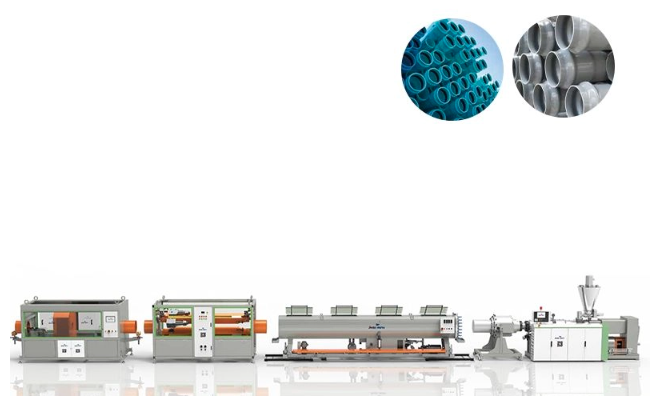
You see the pipe extrusion line as the heart of hdpe pipe production. This line turns raw plastic pellets into strong, flexible pipes. You start with feeding. The machine pulls hdpe pellets from a hopper using a precise dosing system. This step makes sure you get the right amount of material every time.
Next, the pellets move into the extruder. The extruder melts and mixes the hdpe under controlled heat. The screw inside the machine pushes the melted plastic forward. You get a smooth and even flow. The melted hdpe then passes through a die head. This die shapes the pipe into the size and thickness you need.
After shaping, the hot pipe enters a vacuum calibration tank. This tank cools the pipe and sets its exact size. You see spray cooling sections that help the pipe keep its round shape and smooth surface. The pipe then moves to the haul-off unit. This machine pulls the pipe at a steady speed. You get pipes with even walls and no bends.
When the pipe reaches the right length, an automatic cutter slices it cleanly. For small hdpe pipes, the machine coils them up. For large pipes, you see them stacked or sent for packaging. Each step in the line helps you make hdpe pipes that last for years.
Here is a quick look at the main steps:
Melting and mixing the material
Shaping the pipe with a die head
Cooling and calibrating in a vacuum tank
Haul-off for steady movement
Cutting to the right length
Winding or stacking for delivery
You want hdpe pipes that meet high standards. New technology in pipe extrusion lines helps you get better pipes with less waste. Chipless cutting now makes the process faster and cleaner. You do not see plastic chips or dust, so you save material and keep your work area clean. Dustless chamfering gives you pipes with smooth edges and perfect shapes.
Manufacturers have improved the machines too. Fine-tuning the barrel and screw design helps the hdpe flow better. You get pipes with even walls and fewer defects. Better melt uniformity means each hdpe pipe has the same strength from end to end. Some new designs use less energy, cutting power use by up to 30%. This saves you money and helps the environment.
You also see high-efficiency motors and real-time monitoring tools in modern extrusion lines. These tools let you check the process as it happens. You can fix problems right away. Innovative die designs help you make hdpe pipes with less waste and more accuracy. These changes make hdpe pipe production faster, greener, and more reliable.
Tip: When you choose hdpe pipes, ask about the extrusion line technology. Better machines mean better pipes for your project.
You want pipes that last a long time. Polyethylene pipes can last for many years. Most pe pipes work for 50 to 100 years. They do not rust or break down easily. This is because the material fights corrosion and stress. You do not have to worry about rust or decay. Many companies give warranties for 50 years or more. Some pipes can last up to 100 years if you install and care for them right.
Polyethylene pipes last 50 to 100 years in normal use.
Many systems work well for 80 to 100 years with good installation.
You do not need to fix or replace pipes often.
You save money because you do not fix leaks much. Strong hdpe pipes mean fewer problems and less downtime. You get a good deal that keeps your system working.
Maintenance Requirement | Key Characteristics | |
|---|---|---|
Polyethylene (PE) | Low | Fights corrosion, lasts long, needs less fixing and costs less |
Polypropylene | Low | Needs little care, resists corrosion, works in many places |
HDPE | Low | Does not rust or break down, lasts long, costs less to care for |
You need pipes that can handle tough chemicals. Polyethylene pipes resist many solvents, gases, and strong fluids. This makes them good for chemical plants and water treatment. You do not see rust or build-up inside the pipe. This helps stop blockages and leaks.
Polyethylene pipes resist most solvents and gases.
Strong hdpe pipes work well in many factories.
You do not get leaks from corrosion or chemicals.
But you should know the limits. Polyethylene can crack under high pressure. It does not handle heat very well, especially in high-density types. Always check if the pipe fits your project before you start.
You often need to put pipes underground. Polyethylene pipes bend and move with the ground. Rigid pipes cannot do this. Pe pipes adapt to soil changes. This stops leaks from ground movement or earthquakes. You can join pipes with fusion methods. Fusion welding, electrofusion, butt fusion, and socket fusion make strong joints. These methods help stop leaks at the joints.
Feature | High-Density Polyethylene (HDPE) | Precast Reinforced Concrete Pipe (RCP) |
|---|---|---|
Flexibility | Bends easily, handles ground movement | Stiff, needs careful placement |
Weight | Light, easy to carry | Heavy, needs more workers |
Chemical Resistance | Very good | Good, but not as good as HDPE |
Installation Complexity | Quick, needs less work | Harder, needs careful joint sealing |
50 to 100 years | Over 100 years | |
Susceptibility to Damage | Can be damaged by others | More tough against outside damage |
You get many good things from using pe pipe underground. Hdpe pipes are light, so you can install them fast. You spend less money on workers and tools. Fusion joining gives you strong, leak-free pipes. Polyethylene is a smart and strong choice for underground pipes.
You help the planet when you pick polyethylene (PE) pipe. PE pipes are good for the environment in many ways. These benefits show up in how pipes are made, used, and recycled.
One big benefit is that PE pipes can be recycled. Old PE pipes can be turned into new pipes. This keeps plastic out of landfills. It helps create a circular economy. Using recycled materials cuts down on waste and saves resources. Many companies use recycled PE to make new pipes. This means they need fewer new materials.
PE pipes have a low carbon footprint. These pipes last more than 50 years. Long-lasting pipes do not need to be replaced often. Fewer replacements use less energy and make fewer greenhouse gases. PE pipes are light, so moving them uses less fuel. You also need less heavy equipment to install them. All these things help lower carbon emissions for your project.
Smart manufacturing makes PE pipes even better for the planet. New machines use less energy and make less waste. Some factories recycle water and use clean energy. These changes make the process more sustainable. When you choose PE pipes, you support companies that care about nature.
Here are the main environmental benefits of PE pipes:
Environmental Benefit | Description |
|---|---|
Recyclability | PE pipes can be made with recycled materials. This helps create a circular economy and cuts waste. |
Reduced Carbon Footprint | PE pipes last over 50 years. This means fewer replacements and lower emissions from transport and installation. |
Smart Manufacturing | New ways to make pipes use less energy and waste. This helps the planet stay healthy. |
Tip: Using PE pipes helps protect the earth for future generations.
PE pipes cause less pollution. They do not rust or leak chemicals into soil or water. You get clean water and safe soil. Farmers, city workers, and builders all benefit from this safety.
You can feel proud when you use PE pipes. You save energy, cut waste, and help keep the world clean. Every time you pick PE pipe, you make the planet better.
You need to know that polyethylene pipe has some limits. One main limit is how it reacts to heat and sunlight. When you use PE pipe in places with high temperatures, the pipe can become brittle. This means it may crack or break if you put it under stress. If you use the pipe for high-pressure jobs in hot areas, you may see problems sooner. The pipe can lose its strength and not work as well as you expect.
Sunlight can also cause trouble for PE pipes. If you leave the pipe outside for a long time, the sun’s UV rays can weaken the material. The pipe may not last as long or stay as strong. You should cover or bury the pipe if you want it to last. If you use PE pipe above ground, try to protect it from the sun. This will help you avoid early damage and keep your system safe.
Tip: Always check the temperature and sunlight in your area before you pick PE pipe for your project.
You must also think about how much pressure the pipe can handle. PE pipes work well for many jobs, but they have clear limits. You should not use them for every high-pressure system. Each grade of PE pipe has a maximum pressure rating. If you use the pipe for more than its rating, you risk leaks or bursts.
Here is a table that shows the main grades and their pressure limits:
Grade | MRS (MPa) | Max Operating Pressure | Description |
|---|---|---|---|
PE63 | 6.3 | 6–8 bar | Used for low-pressure systems |
PE80 | 8.0 | 10–12 bar | Good for medium and low-pressure applications |
PE100 | 10.0 | 16–25 bar | Best for high-pressure and demanding systems |
You see that PE63 and PE80 are best for low-pressure uses. These include irrigation, drainage, and other jobs where you do not need strong pipes. PE100 is the top choice for high-pressure needs. You use it for water supply and gas lines that must handle more force.
If you pick the wrong grade, you may have problems. Low-pressure pipes will not work for high-pressure jobs. You should always match the pipe grade to your project. This helps you avoid leaks, breaks, and costly repairs.
Note: Always read the pipe’s label and check its pressure rating before you install it.
PE pipe gives you many benefits, but you must know its limits. You get the best results when you use the right pipe for the right job.
Pe pipe is used to bring water to homes and schools. These pipes carry clean water from plants to your faucet. Pe pipes are chosen because they do not rust and last a long time. When you use pe pipes, you get fewer leaks and less fixing. Pe pipes are light, so workers can move them easily. Many water systems pick pe pipe because it bends around things and handles ground shifts. You use pe pipes for new plumbing and fixing old pipes. These pipes keep water safe and steady.
Application | Benefit |
|---|---|
Municipal water supply | Lasts long, stops leaks |
Plumbing | Easy to put in, bends well |
Drop pipe | Brings water up reliably |
Drop pipe is used in wells and pumps. It helps pull water from underground. Pe pipe is trusted for drop pipe because it does not rust and works well in wet places. Water teams use drop pipe to connect pumps to tanks. Drop pipe is also found in farm and garden watering systems.
Pe pipes are used to carry gas in cities and towns. These pipes move natural gas safely to homes and stores. Pe pipe is picked because it resists chemicals and does not rust. Gas companies use pe pipes for safe gas lines. Pe pipes are put underground, where they bend and move with the dirt. This helps stop leaks during earthquakes or heavy traffic. Pe pipes are used for gas plumbing because fusion welding makes strong joints. Drop pipe connects meters and regulators to main gas lines.
Feature | Gas Distribution Benefit |
|---|---|
Flexibility | Handles ground shifts |
Chemical resistance | Moves gas safely |
Drop pipe | Links meters and gas lines |
Pe pipes make gas systems safer and easier. Water teams often work with gas companies to put in pe pipes for both water and gas.
Pe pipe is used for sewer and drainage in cities, factories, and farms. These pipes move dirty water and rain away from buildings. Pe pipes are picked because they are light and easy to put in. Pe pipes bend around corners and fit in tight spots. Plumbing crews like pe pipes for water and sewer jobs because they last a long time.
Studies show pe pipes can last up to 100 years in sewage systems. They are tough and resist damage.
Pe pipes are light.
They bend easily.
They can handle high pressure up to 16 bar.
HDPE pipes were tested in different conditions.
Compared to steel pipes, pe pipes wear down less.
Drop pipe is used in drainage to move water fast. It helps stop floods and keeps soil dry. Drop pipe is also used in farm irrigation to drain fields after rain. Water teams use pe pipes for sewer lines because they resist chemicals and blockages. Pe pipes are trusted for sewer and drainage plumbing because they keep systems clean and safe.
Factories and chemical plants often pick polyethylene pipes for their systems. These pipes help move chemicals and acids safely. They do not rust or react with strong fluids. This keeps workers and equipment safe. You can use them for waste lines and cooling water. They also work for moving slurries in factories.
Fusion welding makes strong joints. This stops leaks and keeps the system safe. You can trust these pipes where safety is important. Many companies use them underground and above ground. You can install them fast because they are light. Handling them is easy for workers.
Tip: Always check the chemical chart before picking a pipe. Some fluids need special grades of polyethylene.
Here is a table showing where you use these pipes:
Application Area | Why Use Polyethylene Pipes? |
|---|---|
Chemical Transport | Resist acids, bases, and solvents |
Wastewater Lines | Do not corrode or clog |
Cooling Water Systems | Stay strong in cold and warm water |
Slurry Movement | Handle thick, gritty fluids |
Factory Plumbing | Easy to install and maintain |
These pipes work for many jobs in factories. You get a safe and long-lasting system for your plant.
Farmers use polyethylene pipes to help crops grow. These pipes move water to plants in fields. You can lay them above ground or bury them under soil. They bend around rocks and hills easily. You do not need big machines to put them in.
You use these pipes for drip irrigation and sprinklers. Drip irrigation gives water right to the roots. This saves water and helps plants grow strong. Sprinkler systems cover large fields with water. You can change the layout because the pipes are flexible.
Note: You save money and water with modern irrigation systems using polyethylene pipes.
Here are ways you use these pipes in farming:
Main water lines for fields
Branch lines for drip irrigation
Sprinkler supply pipes
Pipes for livestock water systems
You can use them in greenhouses and gardens too. These pipes last many years in sun and rain. You get better crops and lower costs with the right setup.
You often choose between pe pipe and PVC pipe for water and gas projects. Both types give you strong and lightweight options. PVC stands for polyvinyl chloride. It is a hard plastic that works well for many uses. You find PVC pipes in plumbing, drainage, and irrigation.
Pe pipes bend more easily than PVC pipes. This means you can install them in places where the ground moves or shifts. PVC pipes are more rigid. They can crack if the soil settles or shakes. Pe pipes also handle freezing and thawing better. You get fewer breaks in cold weather.
PVC pipes cost less for short runs and small jobs. They are easy to cut and glue. Pe pipes last longer in tough conditions. They resist chemicals and do not rust. You can use fusion welding to join pe pipes. This makes strong, leak-free joints. PVC pipes use glue or rubber rings, which can leak over time.
Tip: Pick pe pipe if you need flexibility and long life. Choose PVC for simple, low-cost jobs with little ground movement.
You may wonder how pe pipe compares to steel pipe. Steel pipes have served for many years in water, gas, and industrial systems. They are strong and handle high pressure. You see them in big buildings and factories.
Pe pipes give you many advantages over steel. They weigh much less, so you can carry and move them easily. You do not need heavy machines for installation. Pe pipes bend around corners and fit in tight spots. Steel pipes stay stiff and need more fittings.
You also get better chemical resistance with pe. Steel can rust or react with some fluids. Pe pipes do not rust. You join pe pipes with seamless fusion. Steel pipes use threads or flanges, which can leak if not sealed well.
Here is a table to help you compare:
Feature | Polyethylene (PE) Pipe (HDPE) | Steel Pipe (Carbon/Stainless) |
|---|---|---|
Flexibility | High | Low |
Weight | Lightweight | Heavy |
Chemical Resistance | Excellent | Moderate |
Joint Security | Seamless fusion | Threads or flanges |
Pressure Handling | Moderate | High |
Durability | Moderate | High |
Custom Fabrication | Limited | Extensive |
Legacy Integration | Newer installations | Established infrastructure |
You save time and money with pe pipes, especially for underground work. You also avoid rust and leaks. Steel pipes work best for very high pressure or when you need custom shapes.
You see ductile iron pipes in many old water systems. They are strong and last a long time. Ductile iron handles high pressure and heavy loads. You find these pipes under roads and in big cities.
Pe pipes give you a different set of benefits. They do not need protective coatings to stop rust. Ductile iron pipes need special linings or wraps to keep them from corroding. Pe pipes resist chemicals and aggressive soils without extra care.
Both pipe types can last 50 to 100 years if you install them right. Here is a simple table to show the differences:
Pipe Type | Lifespan (Years) | Corrosion Resistance |
|---|---|---|
HDPE | 50 - 100 | Superior, ideal for aggressive chemicals |
Ductile Iron | 50 - 100 | Requires protective coatings |
You get a lighter pipe with pe. This makes installation faster and easier. You also avoid leaks from rust or broken linings. Ductile iron works well for heavy-duty jobs, but pe pipes give you a modern, low-maintenance choice.
Note: Always check your project needs before you pick a pipe. Think about pressure, soil, and how long you want the system to last.
You often see the term SDR when you look at pe pipe. SDR stands for Standard Dimension Ratio. This number tells you how thick the pipe wall is compared to the pipe’s diameter. A lower SDR means a thicker wall and a stronger pipe. For example, SDR11 has a thicker wall than SDR17. You use pipes with lower SDR for higher pressure jobs.
SDR Value | Wall Thickness | Pressure Rating | Common Use |
|---|---|---|---|
SDR11 | Thick | High | Gas, water supply |
SDR17 | Medium | Medium | Water, irrigation |
SDR21 | Thin | Low | Drainage, low pressure |
Tip: Always check the SDR before you pick a pipe. The right SDR helps your system last longer and work safely.
You need to match the pipe’s pressure class to your project. Pressure class tells you how much force the pipe can handle inside. You see this measured in bars or pounds per square inch (psi). Pipes with higher pressure classes work for tough jobs like city water or gas lines. Lower pressure classes fit jobs like farm irrigation or drainage.
High-pressure class: Use for city water, gas, or fire lines.
Medium-pressure class: Good for most water supply and irrigation.
Low-pressure class: Best for drainage or gravity flow.
You find the pressure class marked on the pipe. Always use the right class to avoid leaks or bursts. If you use a pipe with the wrong pressure class, you risk damage and costly repairs.
You must pick the right size of pe pipe for your job. Pipe size affects how much water or gas can move through the system. You measure pipe size by its outside diameter (OD). Common sizes range from small pipes for homes to large pipes for city mains.
Pipe Size (mm) | Typical Use | Max Flow (L/min) |
|---|---|---|
20 | Home plumbing | 30 |
63 | Small water mains | 180 |
110 | City water supply | 500 |
160 | Large mains | 900 |
You also need to think about flow rate. Bigger pipes carry more water or gas. If you pick a pipe that is too small, you get low pressure and slow flow. If you pick a pipe that is too big, you waste money and space.
Note: Good sizing makes installation easier and keeps your system running well. Always check flow charts and ask experts if you are not sure.
Choosing the right SDR, pressure class, and size helps you get the best results from your pe pipe system. You make your installation safer, faster, and more reliable.
You need to know about standards when you choose pipes for your project. Standards help you make sure that every pipe meets strict rules for safety and quality. When you use pipes that follow these rules, you get a system that works well and lasts a long time.
Many groups set these rules for polyethylene pipes. The most important groups are ASTM, ISO, and AWWA. These groups test pipes and fittings in many ways. They check the size, strength, and how the pipe reacts to heat and pressure. They also set rules for how you join pipes and how you test them after you put them in the ground.
Here is a table that shows the main standards for pe pipes in 2026:
Standard | Description |
|---|---|
ISO 1133 | Tells you how to measure the melt flow rate of thermoplastics |
ASTM D2122 | Shows how to check the size of pipes and fittings |
ASTM D2412 | Tests how pipes handle outside pressure using parallel-plate loading |
ASTM D2657 | Gives steps for heat fusion joining of polyolefin pipes and fittings |
ASTM D2837 | Helps you find the hydrostatic design basis for thermoplastic pipe materials |
ASTM D3350 | Sets the rules for polyethylene pipe and fitting materials |
AWWA C906 | Covers pe pressure pipes for water distribution and transmission |
ISO 4427-1 | Lists general rules for pe pipes and fittings for water supply |
ISO 4427-2 | Focuses on pe pipes for water supply |
ISO 4427-3 | Focuses on pe fittings for water supply |
ISO 4427-4 | Focuses on pe valves for water supply |
ISO 4427-5 | Checks if the whole system works as it should |
You see these standards on pipe labels and in technical sheets. When you buy pipes, always ask for proof that they meet these standards. This helps you avoid problems during installation and use.
You also need to follow local rules. Some cities or countries have extra rules for water, gas, or sewer pipes. Always check with your local building office before you start your project.
Tip: Pipes that meet international standards give you peace of mind. You know they will work well and last for many years.
When you follow these standards, you help keep water, gas, and other systems safe. You also make repairs and upgrades easier in the future. Good standards protect your investment and the people who use your system.
You see pipe extrusion as the main way to make modern pe pipes. This process uses heat and pressure to shape plastic into long, strong tubes. You start with small plastic pellets. Machines melt these pellets and push the melted plastic through a mold. The mold gives the pipe its round shape and size. You get a smooth, even pipe that works well for water, gas, or other uses. Pipe extrusion lets you make pipes in many sizes and lengths. You can make thin pipes for homes or thick pipes for city water lines.
You begin with the raw material feeding system. This part holds the plastic pellets in a hopper. The system measures the right amount of pellets for each batch. You see sensors and controls that keep the flow steady. This step helps you get pipes with the same quality every time.
Next, you use the extruder. You can pick a single screw or twin screw machine. The extruder heats the pellets and mixes them well. The screw pushes the melted plastic forward. You control the speed and temperature to get the best results. The extruder makes sure the plastic is ready for shaping.
The melted plastic moves into the pipe die head and molds. The die head shapes the plastic into a round tube. You can change the mold to make different pipe sizes. This part is important for getting the right wall thickness and diameter.
After shaping, you send the hot pipe into vacuum calibration and cooling tanks. The vacuum holds the pipe in the right shape. Cold water cools the pipe fast. This step keeps the pipe round and smooth. You get pipes that meet strict size rules.
You use haul-off machines to pull the pipe at a steady speed. This keeps the pipe from stretching or bending. When the pipe reaches the right length, cutting machines slice it cleanly. You can set the length for each order.
At the end, you stack or coil the finished pipes. Automation control systems help you run the whole line. You can watch the process on screens and fix problems fast. This makes your work safer and faster. You get pipes ready for easy installation.
You want every pe pipe to meet high standards. Quality control checks happen at each step. You test the pipe for size, strength, and smoothness. New machines use cameras and sensors to spot problems early. Some lines use smart robots to pack and move pipes. You see less waste and better pipes with these new ideas. Companies like Bekwell lead the way with advanced technology. You get pipes that last longer and work better in many jobs.
Tip: Always ask your supplier about their quality checks and new technology. Better machines mean better pipes for your project.
Pe pipes are used in many real projects. Each project needs a pipe that fits its job. Factories, farms, cities, and homes use pe pipes for different reasons. You can pick the size, color, and shape you need. Customization helps you get the right pipe every time.
If you work on a city water system, you need strong pipes. These pipes must last for many years. You can choose thick walls and special grades for high pressure. Some jobs need pipes that bend around corners or fit tight spaces. Flexible pe pipes can handle ground movement.
Factories need pipes that resist chemicals. You can order pe pipes with extra protection. These pipes keep workers safe and stop leaks. Farms use pe pipes for irrigation. You can pick pipes that work well in sun and rain. Special fittings help drip systems work better.
Here are some common ways pe pipes are used:
Water supply for cities and towns
Gas distribution networks
Sewer and drainage systems
Chemical transport in factories
Irrigation for farms and gardens
You can ask for pipes in different colors. Color helps you tell water pipes from gas pipes. Some pipes have stripes or markings. This makes installation easier and safer.
Manufacturers like Bekwell offer many ways to customize pe pipes. You can choose the length, diameter, and wall thickness. You can ask for pipes with special joints or coatings. Smart machines make pipes that fit your exact needs.
Application Area | Customization Options | Benefit |
|---|---|---|
Water Supply | Thick walls, custom length | Long life, high pressure |
Gas Distribution | Color coding, special joints | Easy identification, safety |
Sewer/Drainage | Flexible pipes, smooth surface | Fast installation, fewer leaks |
Chemical Transport | Extra protection, special grade | Safe handling, no corrosion |
Irrigation | Fittings, UV resistance | Works in sun, easy setup |
You get the best results when you match the pipe to your project. Customization helps you solve problems before they start. You save time and money during installation. You also make your system safer and more reliable.
Tip: Always talk to your supplier about your needs. Custom pe pipes help you build better systems for every job.
You learned how pe pipe stands out for strength, flexibility, and long life. You saw the types of pe pipes and their uses in water, gas, and farming. You can choose the right pe for your project and make installation easier.
Stay informed by checking technical guides, talking to suppliers, and following new standards.
Review your needs before picking pe pipes.
Ask experts for advice on installation.
Keep up with updates in pe technology.
You use PE pipe to move water, gas, or chemicals. It works well for city water lines, gas supply, farm irrigation, and drainage. PE pipe lasts long and does not rust.
You can use PE pipe above ground, but you should protect it from sunlight. UV rays can weaken the pipe over time. Cover or paint the pipe for longer life.
You join PE pipes with heat fusion methods. These include butt fusion, electrofusion, and socket fusion. These methods make strong, leak-free joints.
Yes, PE pipe is safe for drinking water. It does not rust or add harmful chemicals. Many cities use PE pipes for clean water supply.
PE pipe can last 50 to 100 years if you install it right. It resists rust, chemicals, and ground movement. You get a long-lasting system.
You find PE pipes in many sizes. Common sizes range from 20 mm for homes to over 1600 mm for city mains. You pick the size based on your project.
Yes, you can recycle old PE pipes. Many companies turn used pipes into new ones. Recycling helps protect the environment.
SDR means Standard Dimension Ratio. It shows the pipe wall thickness compared to its diameter. Lower SDR means a thicker, stronger pipe.