Views: 0 Author: Site Editor Publish Time: 2026-05-13 Origin: Site
You use PVC pipe in plumbing and building. It is strong, flexible, and works well. In 2026, the world market keeps getting bigger. You can see this in the table below:
Year | CAGR (%) | |
|---|---|---|
2025 | 26.89 | N/A |
2034 | 37.60 | 3.66 |
Makers use eco-friendly materials and recycle more. They also save energy and use better technology. This guide helps you pick the best choices for your projects.
PVC pipe is tough and bends easily. It works well for plumbing, drainage, and watering projects. Pick the right PVC pipe for your job. Use Schedule 40 for low pressure. Use Schedule 80 for high pressure. Check your PVC pipes often and take care of them. This helps them last longer and saves money on repairs. Use the right way to join pipes, like solvent cementing. This stops leaks in your plumbing. Learn about new materials and ways to make PVC pipes stronger and better for the planet. Follow your local building rules when you put in PVC pipes. This keeps your work safe and legal. Think about the environment when you pick PVC pipes. This can change how long they last and how well they work. Always look for certification marks on PVC pipes. This shows they are safe and good quality.
You can find pvc pipe in many buildings today. It is made from polyvinyl chloride, which is a strong plastic. People use pvc pipe for water, drainage, and irrigation. Many like pvc pipe because it is light and simple to use. You can cut and join it with easy tools. Builders and homeowners pick pvc pipe for plumbing because it lasts long and does not break easily.
PVC pipe is a type of plastic pipe. You see it in houses, schools, factories, and farms. It is stronger and more flexible than other plastic pipes. PVC pipe is safe for moving water and works well.
PVC pipe is made mostly from polyvinyl chloride. This plastic gives the pipe special features. When you use pvc pipe, you get many good things. The table below shows how pvc pipe is different from other pipes:
Property | Description |
|---|---|
Corrosion Resistance | PVC does not rust or scale, making it suitable for long-term water transport. |
Temperature Resistance | Limited to cold water use; not approved for hot water distribution. |
Strength and Durability | More durable than metal, concrete, or clay for abrasive slurries. |
Chemical Resistance | Resistant to a wide range of chemicals at temperatures up to 140°F. |
Light Weight | Easier to handle, reducing worker injury and transportation costs. |
Flexibility | Can yield under loading without fracturing, advantageous in underground applications. |
Long-Term Tensile Strength | Formulated for long-term strength, outperforming other thermoplastic materials. |
PVC pipe does not rust, so it is great for plumbing. It also keeps water temperature steady inside. PVC pipe can handle high pressure in homes and factories.
PVC pipe can last more than 100 years if used right. This shows pvc pipe is strong and reliable for big projects. The joints are tight, so there are fewer leaks and repairs. You save money and time because pvc pipe needs little care.
PVC pipe is better than other plastic pipes because it is strong, flexible, and resists chemicals. You can use it for water, drains, and more. It is easy to move and put in place. You do not need special or heavy tools.
PVC pipe is still important in 2026 for many reasons. The table below compares pvc pipe to other materials:
Factor | PVC Pipe Benefits | Alternative Materials |
|---|---|---|
Cost | Significantly more affordable per foot | Higher costs (ductile iron, steel, concrete) |
Durability | Lifespan of 50 to 100 years | Generally shorter lifespan |
Corrosion Resistance | No need for expensive coatings | Requires coatings for protection |
Installation Ease | Lightweight, basic tools sufficient for installation | Heavier, requires specialized tools |
Maintenance Savings | Strong joints minimize leaks, reducing repairs | Higher maintenance costs |
Efficiency | Smooth interior reduces friction, lowers energy use | Less efficient flow |
PVC pipe is light, so you can move and install it fast. You do not need costly tools. Projects finish quicker and cost less. The inside of pvc pipe is smooth, so water flows easily. This saves energy and makes things work better.
PVC pipe is tough and does not rust. You do not have to fix it often or worry about leaks. Cities and public buildings use pvc pipe for safe water.
PVC pipe helps the environment too. Makers use recycled materials and safe additives. When you pick pvc pipe, you help the planet. This guide helps you choose the best for your needs.
PVC pipe is the top choice for plastic pipes in 2026. People trust it for plumbing, irrigation, and building. It lasts long, is easy to install, and stands up to chemicals.
You will see two main types of pvc pipe in most projects: Schedule 40 and Schedule 80. These types of pvc pipe have different wall thickness and pressure ratings. Schedule 40 pvc pipe has thinner walls. You can use it for lower-pressure systems, like home plumbing. Schedule 80 pvc pipe has thicker walls. It works well for high-pressure jobs, such as industrial settings.
Here is a table to help you compare these two types of pvc pipe:
Pipe Type | Wall Thickness | Pressure Rating | Application Type |
|---|---|---|---|
Schedule 40 | Thinner | Lower | Residential use |
Schedule 80 | Thicker | Higher | Industrial applications |
You can choose schedule 40 pvc for cost-effective projects. You can pick schedule 80 pvc when you need more strength and durability. Both types of pvc pipe offer good chemical resistance and long life.
Foam core pvc pipe is another option you can use. This type of pvc pipe has a layer of foam inside. It is lighter than solid pvc pipe. You can handle and install it easily. Foam core pvc pipe is a smart choice for budget projects. You will find it in commercial buildings and homes where you need drainage or venting.
You may wonder how foam core pvc pipe compares to ABS pipe. ABS pipes are more robust. You can use them for sewage and underground work. Foam core pvc pipe is more flexible. You can use it for indoor plumbing layouts. You will find foam core pvc pipe easier to cut and move. It is also cost-effective.
Foam core pvc pipe is lightweight.
You can handle it with less effort.
It is practical for many commercial uses.
You need to know the difference between pressure-rated and non-pressure types of pvc pipe. Pressure-rated pvc pipe is made for gas and water lines. It follows strict safety standards, such as ISO and ASTM. You can trust it for jobs where water or gas moves under pressure.
Non-pressure pvc pipe is used for drainage, waste, and venting. It does not carry water under pressure. It must be stiff enough to resist soil loads. Standards like ASTM and ISO set the minimum stiffness for these pipes.
Here is a table to show the uses and standards:
Type of Pipe | Allowable Uses | Safety Standards |
|---|---|---|
Pressure-rated PVC | Used in gas and water applications | Designed based on material strength and safety factors, following ISO and ASTM standards. |
Non-pressure PVC | Used in drainage, waste, and venting | Focuses on stiffness to resist soil loads, with standards like ASTM and ISO specifying minimum stiffness requirements. |
You can select the right types of pvc pipe for your project by checking the pressure rating and application. Pressure-rated pvc pipe gives you safety and durability. Non-pressure pvc pipe works well for drains and vents.
There are many specialty pvc pipes in stores in 2026. These pipes have special jobs. They help fix plumbing and building problems. Specialty pvc pipes are important for homes and factories. You can use them for water, waste, and irrigation.
Big plumbing jobs use specialty pvc pipes for water and waste.
Pipe connections use specialty pvc pipes to make strong joints.
Specialty pvc pipes can change the direction or size of flow.
Pressure systems use specialty pvc pipes to hold liquids or gases.
Homes use specialty pvc pipes for water and drainage.
Farms and gardens use specialty pvc pipes for irrigation.
Utility projects use specialty pvc pipes for many needs.
CPVC pipes are used in places with high heat. CPVC pipes stay strong when hot. You can use them for hot fluids and steam. These pipes resist chemicals and stop leaks. This is important in factories and labs.
Specialty pvc pipes help you build safe and good systems. You can pick the right pipe by knowing its features and uses.
You need to know the color codes and markings on pvc pipes. These codes show what the pipe is for. They help you follow rules and keep things safe. You can avoid mistakes by checking these marks.
Yellow means the pipe is for gas that can burn or explode.
Brown means the pipe is for liquids that burn hot, like fuel oil.
Orange means the pipe is for dangerous stuff, like acids.
Red means the pipe is for fire systems, like fire water mains.
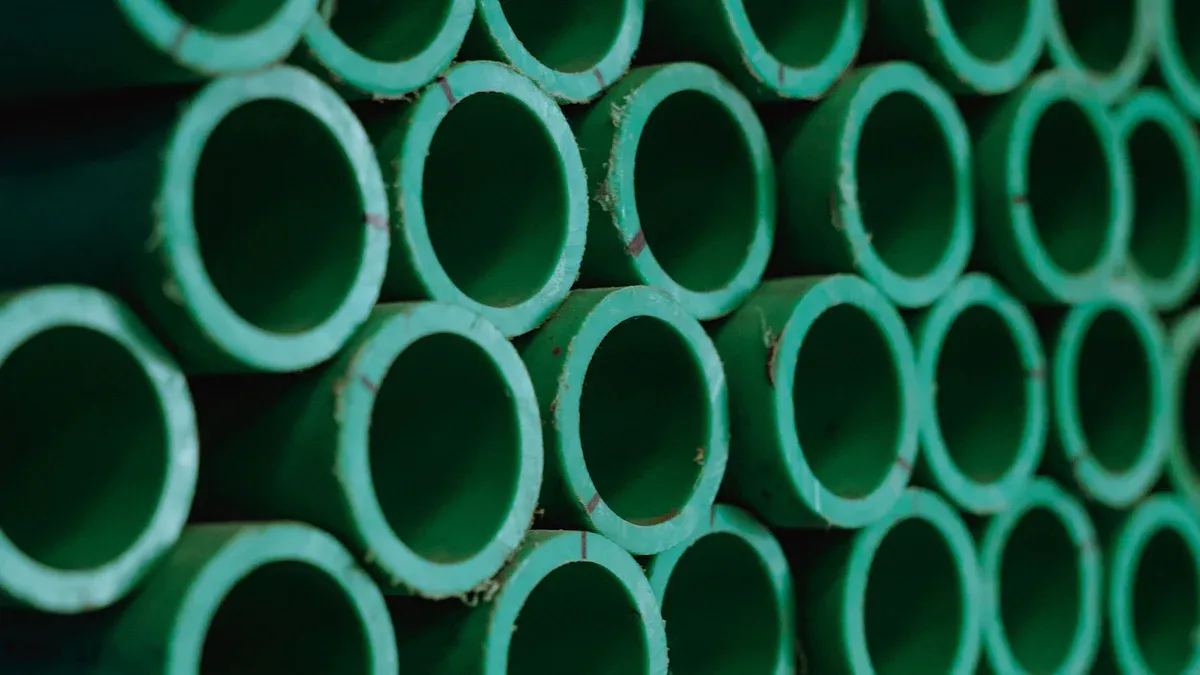
Green means the pipe is for water that is not for fire.
Blue means the pipe is for air under pressure.
Purple means the pipe is for water that is not safe to drink.
White means the pipe is for general service lines.
Gray means the pipe is for steam or utility services.
Black means the pipe is for special systems or waste.
You can see these colors printed or painted on the pipe. Markings also show size, pressure, and maker. You should check these before you install the pipe. This helps you follow rules and keeps your project safe.
Tip: Always match the color and marking with your project. This stops mistakes and makes sure things work right.
You can use color codes and markings to pick and install pvc pipes. This helps you build safe systems that work well.
Image Source: unsplash
You need to know about pvc pipe fittings to build strong plumbing systems. These pipe fittings connect, join, and change the direction of pipes. You use pvc pipe fittings to make your pvc pipe system work for water, drainage, or venting. Each type of pipe fittings has a special job. You can see the main types and their functions in the table below:
Type | Function |
|---|---|
Tees | Split a line into two separate lines or connect two lines into one main line. |
Elbows | Change the direction of the piping system, available in 90-degree and 45-degree angles. |
Crosses | Join four pipe sections, used for structural integrity and to divide fluid flow. |
Couplings | Connect two sections of pipe, can reduce size for connecting different diameters. |
You use elbows when you want to change the direction of water flow. Tees help you branch out water to different rooms. Couplings let you connect two straight pieces of pvc pipe. Reducers help you join pipes of different sizes. Caps and plugs seal the ends of pipes. Adapters connect pvc pipe to other materials. You find these pipe fittings in almost every plumbing project.
Tip: Always match the right pvc pipe fittings to your system. This keeps your water safe and your system strong.
You have several ways to join pvc pipe fittings. Each method works best for certain jobs. You should pick the right method for your system.
Solvent cementing is the most common way to join pvc pipe fittings. You use a special glue that melts the surface of the pipe and the fitting. When you push them together, they form a strong bond. This method gives you a leak-proof joint. You use it for water supply and drainage systems.
Threaded connections let you screw pvc pipe fittings together. You use these when you want to take the system apart later. You see threaded pipe fittings in repairs or places where you need to change parts often. You must use thread tape to stop leaks.
Mechanical couplings use rubber gaskets or clamps to join pvc pipe fittings. You do not need glue or threads. You use these pipe fittings for quick fixes or when you join different types of pipes. Mechanical couplings can leak if the ground moves or if the system has high pressure changes. You should check these pipe fittings often.
Solvent cement
Rubber gaskets
Bell-and-spigot joints
Mechanical couplings
You can use these joining methods to build reliable pvc pipe systems. Each method has its own strengths.
Sometimes you need to take apart pvc pipe fittings. If you used solvent cement, you cannot unglue the pipe fittings. You must cut the pipe and use new pipe fittings. If you used threaded connections or mechanical couplings, you can unscrew or unclamp the pipe fittings. This makes repairs easier. Always plan your system so you can fix it if needed.
This guide helps you pick the right pvc pipe fittings and joining methods for your project. You can build strong, safe, and easy-to-fix systems with the right pipe fittings.
You need the right tools and materials for a successful pvc pipe installation. This guide helps you choose what you need for easy installation and safe results. The table below lists the most important items for working with pvc:
Tool/Material | Description |
|---|---|
Heat Gun | Heats pvc pipes for bending, with adjustable temperature settings. |
Bending Springs | Supports the inside of the pipe to prevent kinks during bending. |
Sand | Fills larger pipes for support while bending, especially over 2 inches. |
Measuring Tape | Ensures accurate measurements before cutting or bending. |
Forming Jigs | Helps you make consistent bends for a professional look. |
Heat-Resistant Gloves | Protects your hands from heat when working with pvc. |
Safety Glasses | Shields your eyes from hot plastic or debris. |
Respiratory Masks | Keeps you safe from fumes when heating pvc indoors. |
You should gather all these tools before starting your installation. This makes working with pvc safer and more efficient.
Cutting pvc pipe the right way gives you clean, straight edges. You have several options for cutting, and each works best for different situations. Follow these steps for best results:
Use a measuring tape to mark where you want to cut.
Choose the right tool:
PVC cutters work well for pipes up to 2 inches. They give you a clean cut.
Hacksaws are good for straight or angled cuts. Secure the pipe in a vise and saw along your mark.
Cable saws help in tight spaces but may leave rough edges.
Cut with steady pressure. Do not rush.
After cutting, remove any burrs or rough spots. Use a deburring tool or sandpaper.
Chamfer the edge slightly. This helps the pipe fit into fittings more easily.
Tip: Measure twice and cut once. This reduces mistakes and saves time during installation.
Sometimes you need to bend pvc pipe to fit around corners or obstacles. Working with pvc becomes easier when you know the right bending techniques. Follow these steps for safe and smooth bends:
Heat the pipe with a heat gun. Keep the temperature between 150-180°F. Use an infrared thermometer to check.
Insert a bending spring or fill the pipe with sand for support. This stops the pipe from kinking.
Use a forming jig to guide the bend. This gives you a smooth, even curve.
Bend the pipe slowly. Do not force it.
Let the pipe cool at room temperature. Do not use water or air to cool it quickly, as this can cause warping.
Always wear heat-resistant gloves and safety glasses when working with pvc and heat.
Working with pvc in this way helps you avoid damage and ensures your installation looks professional. You can use these methods for both home and commercial projects.
You can complete a PVC pipe installation by following clear steps. These steps help you build a strong plumbing system and avoid mistakes. Here is a simple guide for residential projects:
Preparation
Measure the space where you want to install the pipe.
Cut the pipe to the right length using a PVC cutter or hacksaw.
Clean the ends of the pipe and the inside of the fittings with sandpaper and a clean rag.
Dry fit the pieces together to check alignment.
Joining
Apply PVC primer to the pipe and fitting. This cleans and softens the surfaces.
Spread PVC cement on both surfaces. Work quickly because the cement dries fast.
Push the pipe into the fitting and twist slightly. Hold for a few seconds to set the joint.
Trenching and Placement
Dig a trench for underground installation. Make sure the trench is deep enough. Most codes recommend burying PVC pipe at least 12 to 18 inches below the surface for water lines. For colder climates, you may need to go deeper to prevent freezing.
Lay the pipe in the trench. Keep the pipe straight and avoid sharp bends.
Backfill the trench with soil. Pack the soil gently to protect the pipe.
Testing
After installation, test the system for leaks. Fill the pipes with water and check all joints.
For pressure systems, conduct a pressure test. Stand clear during testing to stay safe.
Tip: Always check local building codes before starting installation. Codes may set rules for trench depth and pipe placement.
You can use these steps for both indoor and outdoor projects. Careful installation keeps your plumbing system working for years.
You must follow safety tips during installation to protect yourself and your project. Here are important points to remember:
Wear safety glasses and gloves to prevent injury.
Use respiratory masks when working with PVC cement or primer. Good ventilation stops harmful fumes from building up.
Handle pipes gently. Avoid dropping or hitting them to prevent cracks.
Secure pipes during transport. Tie them down so they do not roll or slip.
Use alignment tools to keep pipes straight. This prevents stress and leaks.
Lift heavy pipes with a partner or use mechanical aids. Do not strain your back.
Stand clear during pressure testing. Use remote monitoring if possible.
Train yourself and others on safe tool use and emergency procedures.
Keep a fire extinguisher and first aid kit nearby.
Note: Regular inspections help you spot leaks, corrosion, or wear early. Fix problems right away to keep your system safe.
You can make your installation safer by following these tips. Safety keeps your project on track and protects everyone involved.
You need to pick the right pvc pipe for your project. Every job needs a certain kind of pipe. Think about what goes through the pipe, how much pressure it will have, and how hot or cold it will get. Also, consider where you will use the pipe and how long you want it to last.
Schedule 40 pvc is good for most home plumbing. It can handle more pressure than regular water pipes.
Schedule 80 pvc has thicker walls. You use it in factories where pressure is higher.
PVC-U works best for cold water and drains. It can last over 100 years in many places.
CPVC is best for hot water. It can handle heat up to 200°F.
PVC-O is strong. You use it in city water systems and places with high pressure.
PVC-M and PVC-HI are used for special jobs like moving gas.
Check if the pipe resists corrosion. PVC can handle many chemicals, so it works in tough places. It is easy to install because it is light. This helps you finish faster and saves money. Fire safety is important in some jobs. PVC can burn, so you need to protect it where there is fire risk. Think about the environment too. PVC lasts a long time, but you should plan for recycling and disposal.
Tip: Always check what your project needs before picking pvc pipe. This helps you avoid mistakes and keeps your system safe.
You need to know how pvc pipe handles pressure and heat. Pressure ratings tell you how much force the pipe can take. Heat changes these ratings. When it gets hotter, the pipe holds less pressure.
Here is a table that shows how pressure drops as temperature goes up:
Temperature | Pressure Capacity (% of Rated) |
|---|---|
73°F | 100% |
100°F | 62% |
140°F | 22% |
PVC pipe works best at room temperature. If you use it for hot water, it cannot hold as much pressure. CPVC is better for hot water because it stays strong when hot. Always check the pressure and temperature ratings before you install the pipe. This keeps your system safe and stops leaks.
Note: Do not use regular pvc for hot water. Pick CPVC for these jobs.
You need to choose the right size for your pvc pipe. Size affects how fast water moves and how much pressure there is. You measure pvc pipe by its diameter. Common sizes go from ½ inch to 24 inches. Match the size to your job.
Small pipes are good for homes and gardens.
Medium pipes work for businesses and bigger water systems.
Large pipes are used in cities and factories.
Check the wall thickness. Schedule 40 pipes have thin walls. Schedule 80 pipes have thick walls. Thick walls mean the pipe can handle more pressure. Look at the length too. Most pipes are 10 feet or 20 feet long. You can cut them to fit your project.
Tip: Always measure twice before you cut. This helps you avoid waste and makes sure the pipe fits.
Use the right fittings for each size. Fittings connect pipes and help change direction. Make sure the fitting size matches the pipe size. This keeps your system strong and stops leaks.
When you pick pvc pipe, think about the job, pressure, heat, and size. You make better choices when you understand these things.
When you pick PVC pipe, think about the environment. Sunlight, soil, and temperature can change how PVC pipe works. These things also affect how long the pipe lasts. If you put pipes outside, sunlight can hurt them. Sunlight can make PVC pipe crack and break after a while. You can keep pipes safe by covering them or putting them underground.
If PVC fittings stay in the sun too long, they can get weak and break. Changes in temperature and the kind of soil can also make them less strong.
Makers put special chemicals in PVC pipes. These chemicals help pipes stay strong in sunlight, rain, and when it gets hot or cold.
PVC pipe fittings are made to fight damage from sunlight and weather. The special chemicals in PVC help pipes stay strong when it is sunny, wet, or hot and cold.
The kind of soil is important too. Some soils have things in them that can slowly hurt PVC pipes. If you work in tough soil, check the soil before you put in pipes. You might need to use extra covers or special pipes.
The soil can also change how long PVC fittings last. PVC is strong, but some soils can make it break down over time.
When it gets hot or cold, pipes can get bigger or smaller. If you live where it is very hot or cold, leave space for pipes to move. You can use flexible joints or give pipes room to grow.
You can help your PVC pipe system last longer if you know about these things. Always look at the place where you will put the pipes. Pick pipes and fittings that are right for your area. Keep pipes safe from sunlight and bad soil. Plan for hot and cold weather. This helps you build a safe and strong system.
You need to check your PVC pipe system often to keep it working well. Regular inspections help you find small problems before they become big ones. You can look for cracks, leaks, discoloration, or warped sections. Sunlight and temperature changes can cause wear and tear on PVC pipe fittings. If you see any signs of damage, you should fix them right away. Qualified professionals can help you spot issues that are hard to see. Inspections let you replace or repair pipes before they cause major disruptions. You protect your plumbing and save money by catching problems early.
Tip: Set a schedule for routine inspections. Check your pipes every six months, especially if they are outside or exposed to sunlight.
You can keep your PVC pipes clean with simple steps. Dirt and buildup can cause clogs and damage over time. High-quality cleaners remove tough stains and keep your pipes clear. You should avoid strong acids and alkalis because they can harm the pipe.
Wash the pipe with mild detergent. Use warm water and a neutral cleaner or special pipe cleaner. Wipe the surface gently.
Rinse with clean water. Make sure you remove all detergent to prevent chemical reactions with water or other fluids.
Wipe dust regularly. Use a dry cloth or feather duster to clean exposed pipes every week.
You should also check the sealing performance of your pipe connections. Inspect sealed joints for leaks every six months. If your pipes are outside, protect them from ultraviolet radiation. Use sunshades or paint to shield them from the sun.
Note: Clean pipes last longer and work better. Regular cleaning stops clogs and keeps water flowing smoothly.
You can paint PVC pipes to protect them from sunlight and make them look better. Painting helps prevent UV damage, which can cause pipes to crack or fade. Choose paint made for plastic surfaces. Clean the pipe before painting. Use a primer if needed. Apply paint in thin layers and let each layer dry. Painted pipes blend in with walls or ceilings and stay strong in harsh weather.
Tip: Use light-colored paint for outdoor pipes. Light colors reflect sunlight and keep pipes cooler.
You keep your PVC pipe system safe and efficient by inspecting, cleaning, and painting it. These steps help you avoid repairs and extend the life of your pipes.
You may find cracks, leaks, or broken sections in your PVC pipe system. Repairing damage keeps your pipes working and prevents bigger problems. You can fix most issues with simple tools and materials. You do not need special skills to repair PVC pipes. You just need to follow clear steps.
Common Types of Damage
Cracks from freezing or impact
Leaks at joints or fittings
Holes caused by drilling or sharp objects
Broken sections from heavy loads
You can spot damage during routine inspections. Look for water stains, wet spots, or unusual sounds. If you see any of these signs, act quickly.
Repair Steps for Small Cracks or Leaks
Turn off the water supply.
Dry the area around the damage.
Clean the pipe with sandpaper.
Apply PVC primer to the crack.
Use PVC cement to seal the crack.
Let the cement dry for at least 30 minutes.
Turn the water back on and check for leaks.
Tip: For tiny leaks, you can use waterproof tape as a temporary fix. This stops water until you make a permanent repair.
Repair Steps for Broken Sections
Cut out the damaged part with a PVC cutter or hacksaw.
Measure and cut a new piece of pipe.
Clean the ends of the new pipe and the old pipe.
Use PVC primer and cement to join the new pipe to the fittings.
Hold the pipe in place for a few seconds.
Wait for the cement to set before turning the water back on.
You can use repair couplings for quick fixes. These couplings slide over the pipe and seal the joint. They work well for emergency repairs.
Table: Repair Materials
Material | Use |
|---|---|
PVC cement | Seals cracks and joints |
PVC primer | Prepares pipe surfaces |
Repair coupling | Joins cut sections |
Waterproof tape | Temporary leak fix |
Replacement pipe | Replaces broken parts |
You should always check your repairs after finishing. Run water through the system and watch for leaks. If you see any problems, repeat the repair steps.
Note: If you find large cracks or repeated leaks, call a professional plumber. Some damage needs expert help.
You can keep your PVC pipe system strong by repairing damage quickly. Regular repairs help you avoid costly replacements and keep your water flowing.
PVC pipe has many good points for homes. It is strong and lasts a long time. You can use it in hot or cold places. PVC pipe is light, so you can carry it easily. It is simple to install. You do not need special tools. PVC pipe does not rust like metal pipes. This means you fix it less often. You save money because it costs less than copper pipes. The inside of PVC pipe is smooth. Water moves fast and does not get stuck. PVC pipe can handle chemicals well. It works where other pipes might break.
These reasons make PVC pipe a smart choice for homes and businesses. You get pipes that work well and save money.
PVC pipe is not perfect. It gets weak when it is hot. You should not use it for hot water. Some oils and solvents can harm PVC pipe. PVC pipe can break if something hits it hard. It is not good for places with heavy things on top. You cannot use PVC pipe everywhere. Always check the rules for your area.
Knowing these limits helps you pick the right pipe for your job.
PVC pipe is better for the planet now. Factories follow strict rules to protect nature. Making PVC pipe puts out less pollution than metal pipes. You can recycle PVC pipe many times. This means less trash goes to dumps. PVC pipe lasts over 100 years. You do not have to replace it often. The vinyl industry works to make recycling easier. They want a cleaner world.
Tip: Picking PVC pipe helps you save money and protect the earth.
You can feel good about using PVC pipe in your home.
You often see pvc and CPVC pipes in plumbing. Both materials look similar, but they have important differences. PVC works well for cold water and drainage. CPVC handles hot water and higher temperatures. You can use pvc for irrigation, waste lines, and outdoor projects. CPVC fits best in hot water systems and industrial settings.
Here is a table to help you compare pvc and CPVC:
Feature | PVC | CPVC |
|---|---|---|
Max Temperature | 140°F | 200°F |
Cost | Lower | Higher |
Color | White/Gray | Off-white/Yellow |
Chemical Resistance | Good | Excellent |
Main Use | Cold water, drains | Hot water, chemicals |
You can cut and join both pipes with similar tools. CPVC costs more, but you get better performance in hot water systems. If you need a pipe for hot water, pick CPVC. If you want a pipe for cold water or drainage, pvc is a smart choice.
Tip: Always check the temperature rating before you install a pipe. This keeps your system safe.
You may wonder about the difference between pvc and ABS pipes. ABS stands for acrylonitrile butadiene styrene. ABS pipes are black and pvc pipes are usually white or gray. You use ABS for drainage, waste, and vent pipes. PVC works for water supply, irrigation, and drains.
ABS is strong and resists impact. You can use it in cold climates because it stays tough. PVC resists chemicals and sunlight better. You can use pvc outdoors and in places with harsh chemicals.
Here are some points to help you decide:
ABS is easier to install because you do not need primer.
PVC needs primer and cement for joining.
ABS is noisier when water flows through it.
PVC is quieter and better for indoor use.
Note: Always follow local codes. Some areas allow only pvc or only ABS for certain jobs.
You may see PPR pipes in modern plumbing. PPR stands for polypropylene random copolymer. PPR pipes are green or blue. You use PPR for hot and cold water. PVC works best for cold water and drainage.
PPR pipes resist heat and pressure. You can use them for drinking water and heating systems. PVC is easier to install and costs less. You can use pvc for irrigation, waste, and vent lines.
Here is a quick comparison:
Feature | PVC | PPR |
|---|---|---|
Max Temperature | 140°F | 158°F |
Cost | Lower | Higher |
Installation | Simple | Requires welding |
Main Use | Cold water, drains | Hot/cold water |
You can pick pvc for simple jobs and low-cost projects. If you need a pipe for hot water or high pressure, PPR is a good option.
Tip: Choose the pipe that matches your project needs. This helps you build a safe and reliable system.
You see metal pipes in old homes and big buildings. Metal pipes include copper, galvanized steel, and ductile iron. You might wonder how PVC pipes compare to these materials. Knowing the facts helps you pick the best pipe.
Key Differences
Feature | PVC Pipe | Metal Pipe |
|---|---|---|
Weight | Lightweight | Heavy |
Installation | Easy, basic tools | Hard, needs special tools |
Corrosion Resistance | Does not rust | Can rust or corrode |
Cost | Lower | Higher |
Lifespan | 50-100 years | 20-50 years |
Chemical Resistance | High | Varies by metal |
Water Flow | Smooth interior, less friction | Rough interior, more friction |
Maintenance | Minimal | Needs regular checks |
You can carry PVC pipes easily. Metal pipes are heavy and need more help to move. You can cut PVC pipes with simple tools. Metal pipes need saws or welding to cut.
PVC pipes do not rust. You do not worry about corrosion or scale. Metal pipes can rust in wet or acidic places. You may need to change metal pipes more often.
PVC pipes cost less. Metal pipes cost more to buy and install. You also pay more to fix metal pipes.
Advantages of PVC Pipes
You install PVC pipes fast.
You avoid rust and leaks.
You spend less on repairs.
You use PVC pipes for water, drains, and irrigation.
Advantages of Metal Pipes
You use metal pipes for hot water and steam.
You pick metal pipes for high-pressure jobs.
You trust metal pipes for fire sprinkler systems.
Tip: Use PVC pipes for cold water, drains, or irrigation. Use metal pipes for hot water or high pressure.
You can use PVC pipes in homes, schools, and farms. Metal pipes work best in factories and places with high heat. Always check local rules before you choose. Some places need metal pipes for certain jobs.
You keep your plumbing safe when you pick the right pipe. You save time and money with PVC pipes. You get strength and heat resistance with metal pipes. You make smart choices when you know these differences.
You may notice water dripping from your PVC pipe joints. Leaks often happen when you do not glue the joints well or when the pipe moves too much. You can fix leaks by checking each joint. Look for wet spots or puddles near the pipe. Use a dry cloth to wipe the area and see if water returns.
Here are steps to fix leaks and joint failures:
Turn off the water supply.
Dry the pipe and joint.
Cut out the leaking section with a PVC cutter.
Clean the pipe ends with sandpaper.
Apply PVC primer and cement.
Join the new fitting and hold it for a few seconds.
Wait for the cement to dry before turning the water back on.
Tip: Always use enough cement and primer. This helps you make strong joints.
You can prevent leaks by supporting pipes with brackets. Do not let pipes hang or bend. Check joints during routine inspections.
You may find cracks in your PVC pipes. Pipes can crack when they freeze, get hit, or stay in the sun too long. Brittle pipes break easily. You can spot cracks by looking for lines or splits on the pipe surface.
Common causes of cracking and brittleness:
Freezing temperatures
Heavy impacts
UV exposure
Old age
You can fix small cracks with PVC cement. For big cracks, cut out the damaged section and replace it. Always protect pipes from sunlight. Use paint or covers to block UV rays.
Note: If you live in a cold area, bury pipes deeper to stop freezing.
You can keep pipes strong by checking them often. Replace old pipes before they break.
You may see PVC pipes change color. Pipes turn yellow, brown, or green when exposed to sunlight, chemicals, or dirty water. Discoloration does not always mean the pipe is weak, but it can show damage.
Color Change | Possible Cause | Action Needed |
|---|---|---|
Yellow | Sunlight, aging | Paint or cover pipes |
Brown | Soil, water stains | Clean and inspect |
Green | Algae, mold | Clean and disinfect |
You can clean pipes with mild soap and water. Use a soft brush to scrub stains. If you see mold, use a disinfectant. Paint pipes to protect them from sunlight.
Tip: Discolored pipes may need extra inspection. Check for cracks or leaks.
You can keep your PVC pipes looking good and working well by cleaning and protecting them.
Clogging is a common problem in PVC pipes. You might notice slow drains, gurgling sounds, or water backing up. Clogs can happen in kitchen sinks, bathroom drains, or outdoor pipes. You need to act quickly when you see these signs. Clogs can cause leaks, pipe damage, or even flooding if you ignore them.
Why Do PVC Pipes Clog?
Many things can block your pipes. Here are some common causes:
Grease and food scraps in kitchen drains
Hair and soap scum in bathroom pipes
Dirt, leaves, or roots in outdoor pipes
Small objects accidentally flushed down toilets
You can prevent most clogs by watching what goes down your drains. Use drain screens to catch hair and food. Never pour grease or oil into the sink. Grease hardens inside pipes and blocks water flow.
How to Spot a Clog
You can look for these signs:
Sign | What It Means |
|---|---|
Slow draining water | Partial blockage |
Gurgling noises | Air trapped by a clog |
Bad smells | Rotting debris in the pipe |
Water backup | Complete blockage |
If you see any of these, you likely have a clog.
How to Clear a Clog
You can try these steps to fix a clogged PVC pipe:
Remove the drain cover.
Use a plunger to push the clog through.
Try a drain snake or auger for tough clogs.
Pour hot (not boiling) water down the drain to loosen grease.
Use a mixture of baking soda and vinegar for mild clogs.
Tip: Do not use harsh chemical cleaners. These can damage PVC pipes and fittings.
If you cannot clear the clog, you may need to take apart the pipe. Unscrew the trap under the sink and clean it out. Always wear gloves and have a bucket ready for water.
How to Prevent Future Clogs
You can keep your pipes clear by following these tips:
Clean drain screens weekly.
Run hot water after each use.
Avoid flushing anything except toilet paper.
Trim tree roots near outdoor pipes.
Note: Regular maintenance keeps your PVC pipes working well and saves you from costly repairs.
You can handle most clogs yourself. If you face repeated blockages, call a plumber. Persistent clogs may mean a bigger problem in your plumbing system.
In 2026, you will see new materials used in pvc pipe making. These materials help make pipes stronger and more dependable. Factories now use advanced composites. These composites give pipes better strength and stop rust. Some pipes use eco-friendly materials like polyethylene. Polyethylene is easy to recycle. There are also bio-based plastics made from plants. These plastics break down on their own and do not harm the earth. Some pipes have smart materials. Smart materials can fix small cracks by themselves. They also fight rust better. Nanotechnology is changing pvc pipes too. Pipes with nanoparticles are lighter and stronger. They last longer than old pipes. Many new underground pvc ducts use recycled pvc. This helps cut down on waste and keeps the planet clean.
Advanced composites make pipes strong and stop rust.
Eco-friendly materials like polyethylene can be recycled.
Bio-based plastics break down and are safe for nature.
Smart materials fix small cracks and save money on repairs.
Nanotechnology makes pipes light and tough.
Recycled pvc helps protect the environment.
These new materials help you build better water systems and buildings. You get pipes that work well and help the earth.
Factories use new ways to make pvc pipes in 2026. You will see more machines doing the work. Machines control heat and pressure very well. This means every pipe is the same size and quality. Some factories use smart sensors to check pipes as they are made. These sensors find problems fast so they can be fixed right away. You get pipes that last longer and work better. New machines also use less energy. This saves money and helps the environment. You can trust that new pvc pipes are safe and high quality.
Process Feature | Benefit to You |
|---|---|
Automation | Same quality every time |
Smart sensors | Find problems early |
Energy-efficient machines | Save money and lower waste |
Real-time monitoring | Safer and better pipes |
You can count on these new ways of making pipes for your projects.
Sustainability is very important for pvc pipes in 2026. More pipes are made with recycled materials. This cuts down on waste and saves resources. Factories use machines that save energy. These machines use less power and make less pollution. Some companies, like Bekwell, make machines that waste less raw material. They also use bio-based and recycled pvc. This helps you pick pipes that are good for the planet. Many new projects in places like Sub-Saharan Africa and Southeast Asia use these green pipes. This gives more people clean water and safe plumbing.
Tip: If you pick pvc pipes with recycled or plant-based materials, you help the earth and support recycling.
You can feel proud using new pvc pipes. They are strong, last a long time, and help make the world greener.
You need to stay informed about new rules for pvc pipes in 2026. Governments and industry groups set these rules to keep water safe and protect the environment. These updates affect how you choose, install, and maintain pvc pipes in your projects.
Many countries now require stricter testing for pvc pipes. You must check that your pipes meet standards for strength, pressure, and chemical resistance. Labels on pipes show if they pass these tests. Look for marks like ISO, ASTM, or EN. These marks mean the pipe meets international safety rules.
Factories use smart machines to help follow these rules. Machines measure each pvc pipe as it is made. They check the size, wall thickness, and even the color. If a pipe does not meet the rules, the machine removes it. This helps you get pipes that are safe and reliable.
You will see more rules about the environment. Many places want factories to use less energy and make less waste. Some countries ask for recycled materials in new pvc pipes. You should ask your supplier if the pipes use recycled or bio-based materials. This helps you follow green building codes and protect nature.
Here is a table to help you understand the main areas of regulatory focus in 2026:
Area of Regulation | What You Need to Know |
|---|---|
Product Safety | Pipes must pass strength and leak tests |
Environmental Impact | Use of recycled materials is required |
Energy Efficiency | Factories must use less energy |
Documentation | Keep records of pipe sources and tests |
You also need to keep good records. Write down where you buy your pvc pipes and keep test reports. Some building inspectors will ask to see these papers before you finish your project.
Tip: Always check the latest rules before you start a job. Rules can change each year. Ask your supplier for help if you are not sure.
You can trust companies like Bekwell to help you meet these new rules. Their machines help factories make pipes that pass all tests. This means you get safe, high-quality pvc pipes for your work.
You play a key role in following these updates. When you use pipes that meet the latest standards, you help keep water clean and buildings safe. You also help protect the planet for the future.
You now know how to choose, install, and care for pvc pipe. This guide gives you the facts you need for safe and strong plumbing. Stay alert to new trends in 2026. Use what you learned for your next project. If you face a tough problem, ask an expert or look for more resources. You can build systems that last.
You can use a PVC cutter for small pipes. For larger pipes, use a hacksaw. Always mark your cut and smooth the edges after cutting.
You should not use PVC pipe for hot water. PVC can weaken and fail at high temperatures. Choose CPVC pipe for hot water systems.
You need to bury PVC pipe at least 12 to 18 inches deep. In cold climates, go deeper to prevent freezing. Check local codes for exact requirements.
You can join PVC pipes with solvent cement. Clean the ends, apply primer, then cement, and push the pipes together. Hold for a few seconds.
PVC pipe is safe for cold drinking water. It does not rust or leach harmful chemicals. Always check for certification marks like NSF or ASTM.
You can paint PVC pipe. Use paint made for plastics. Clean the pipe first and apply a primer if needed. Paint in thin layers for best results.
PVC pipe can crack from freezing, impact, or sunlight. Protect pipes from extreme temperatures and cover outdoor pipes to block UV rays.
PVC pipe can last 50 to 100 years. It resists corrosion and needs little maintenance. Regular inspections help you spot problems early.