Views: 0 Author: Site Editor Publish Time: 2026-06-13 Origin: Site
A WPC profile extrusion machine makes strong profiles. It mixes wood fibers with plastic. The machine shapes the mix into products. These products look like wood but last longer. They also need less care. Many industries use these machines. They make profiles for construction, cars, and furniture. The process gives you wood’s beauty and plastic’s strength.
The global market for these products may reach almost USD 20.24 billion by 2032. A 12.2% yearly growth rate is expected after 2025.
Table of Contents
WPC profile extrusion machines mix wood fibers and plastic. They make strong profiles that look like wood but last longer.
The extrusion process has important steps. These are material preparation, melting, shaping, cooling, and cutting. Each step is needed to make good profiles.
Modern machines have smart controls for temperature and speed. This helps keep the output steady and lowers the chance of mistakes in the product.
WPC profiles can be used in many ways. They are good for building materials, outdoor furniture, and special industrial uses.
Picking the right WPC machine means thinking about how much it can make, what materials it works with, and how automatic it is. This helps meet business needs.
Regular maintenance is very important for the machine to work well. It stops problems and makes sure the profiles are high quality.
Sustainability is becoming more popular in WPC extrusion. Many makers use recycled materials and save energy to help the environment.
Buying a WPC profile extrusion machine can save money over time. It also gives benefits like lower maintenance costs and less energy use.
A WPC profile extrusion machine makes strong profiles. It uses wood fibers and plastic. The machine mixes these materials together. It melts them and shapes them into profiles. These profiles look like wood but last longer. The machine combines, melts, and shapes the mix. It makes profiles for many uses.
Here is a simple table showing the main parts and what each one does:
Component | Function |
|---|---|
Feeder | Accurately measures and delivers raw materials to the extruder. |
Extruder | Melts and mixes materials, often using a twin-screw design for better mixing. |
Profile die | Shapes the melted material into the desired profile. |
Calibration table | Ensures the profile is the correct size and shape, and cools it down. |
Cutter | Cuts the profile to the desired length accurately and consistently. |
Each part of the machine has a clear job. The feeder measures wood and plastic. The extruder melts and mixes them. The die shapes the mix. The calibration table cools and sizes the profile. The cutter makes sure each piece is the right length.
Modern WPC profile extrusion machines have many helpful features. You can control the size and shape of each profile. The machine keeps the temperature steady. This helps the mix flow well and makes even profiles. You use the control panel to set up the machine and check the process.
Feeding system for material input
Extruder to melt and mix materials
Die to shape the profile
Cooling system to solidify the profile
Pulling system for dimension control
Cutting system for length adjustment
Control panel to manage settings
You also get features like:
Regulated temperatures for optimized extrusion
Flexible design for many shapes
Durable, moisture- and pest-resistant products
Eco-friendly manufacturing using recycled materials
Intuitive controls for easy operation and low maintenance
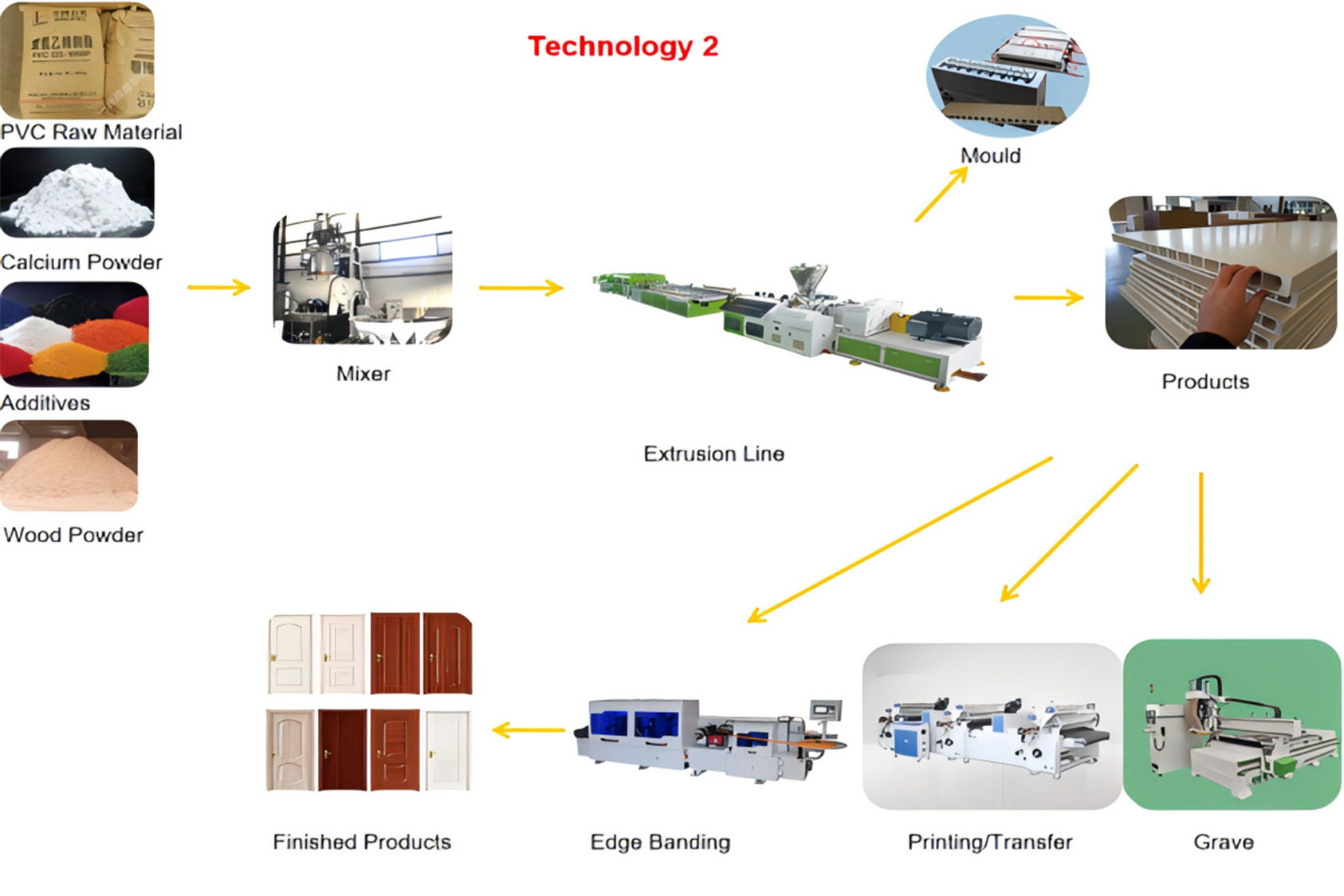
The machine works in a continuous process. You feed in wood fibers, recycled plastics, and additives. The machine heats, mixes, and shapes them into profiles. Different temperature zones help the material flow well. This makes sure the final product is always good quality.
Modern machines can add wood grain textures to the surface. This makes the profiles look more like real wood. Some machines use co-extrusion. This adds a special layer on the outside. The layer helps the product last longer outdoors. It keeps the color even and makes the surface look better.
Here is a table showing how co-extrusion and wood grain features help:
Aspect | Description |
|---|---|
Weather Resistance | Co-extrusion adds a layer that protects against bad weather. |
Color Consistency | The extra layer keeps the color even, even when using recycled materials. |
Outdoor Service Life | The product can last over 10 years outside. |
Aesthetic Appeal | Wood grain textures make the profiles look more attractive and natural. |
You can pick different WPC profile extrusion machines. The two main types are wood-PE and wood-PVC machines. Each type works best for certain uses.
Type of WPC Profile | Application | Output Characteristics |
|---|---|---|
Wood-PE | Outdoor | Good for flooring, fences, and pillars; does not need haul-off in production |
Wood-PVC | Indoor | Used for wall panels and decoration profiles; made for indoor use |
Wood-PE profiles are good for outdoor spaces like gardens and pool areas.
Wood-PVC profiles work best indoors, like wall panels and trims.
The PE-wood profile extrusion line is different from the PVC-wood line. The PE-wood line does not need a haul-off unit. This makes the process simpler for outdoor products. You should pick the machine that matches your product needs and where you plan to use the profiles.
The wpc profile extrusion machine follows a series of steps to turn raw materials into finished profiles. Each step in the extrusion process plays a key role in making sure you get strong, high-quality products.
You start by preparing the wood-plastic composite mix. This step combines wood fibers and plastic polymers. You must check the moisture level in the wood fibers. Too much moisture can cause bubbles or weak spots in the final product. You also need to make sure the plastic is clean and free from dirt.
Mixing the ingredients well is important. A new mixing technique can help you save time and improve the quality of your wpc profiles. The shape of the mixing machine’s teeth helps the fibers and plastic blend better. This step ensures the mix is even and ready for the next stage. You may use a single-screw extruder to remix the ingredients. This helps you get a uniform and consistent material.
Tip: Always check the mix for lumps or dry spots. A smooth, even mix leads to better profiles.
Once you have a good mix, you use the feeding system to move the material into the extrusion line. The feeder measures the right amount of mix and delivers it to the extruder. This step keeps the process steady and helps you avoid waste. If you feed too much or too little, the profiles may not come out right.
The next step in the extrusion process is melting and mixing. The extruder heats the wood-plastic mix until it melts. Inside the extruder, screws turn and push the material forward. The screws mix the melted plastic and wood fibers together. This creates a smooth, even blend.
You must keep the temperature steady during this step. If the temperature is too low, the mix will not melt well. If it is too high, the plastic may burn. Good mixing and melting help you get strong, smooth profiles. This step also removes any air bubbles from the mix.
After melting and mixing, the hot, soft material moves to the die. The die shapes the material into the profile you want. The design of the die is very important. A good die has smooth channels and spreads the mix evenly. This helps you get the right shape and a nice surface finish.
Factor | Impact on Dimensional Accuracy and Surface Finish |
|---|---|
Streamlined flow-channel geometry and uniform melt distribution are crucial for achieving desired profile geometry and surface quality. | |
Calibration | Fixes final geometry and surface texture; must manage thermal contraction behaviors of materials to ensure dimensional accuracy. |
Cooling Strategies | Gradual cooling prevents internal stress and surface defects, while uneven cooling can lead to warping and residual stress in profiles. |
The die also affects how smooth and straight your profiles are. If the die is not designed well, you may see rough spots or uneven shapes. You want to make sure the die matches the profile you need for your project.
Note: The shaping step is where you set the final look and size of your wpc profiles. Pay close attention to die design for the best results.
You need to cool and calibrate the WPC profile right after it leaves the die. This step helps keep the shape and size correct. Cooling stops the profile from shrinking or bending. Calibration makes sure the profile stays straight and smooth.
A calibration table helps guide the profile. The table has parts you can move. These parts hold the profile in place. Water or air cools the profile fast. You can change how fast it cools for different shapes.
Tip: Cooling slowly can stop cracks and surface problems. Fast cooling is good for simple shapes.
You must feed the material steadily and keep the temperature right. These steps help keep the profile strong and smooth. You also need to get rid of water and air in the profile. This stops bubbles and empty spots.
Here is a table that shows the main things needed for good cooling and calibration:
Stability Pillar | Description |
|---|---|
Steady feeding | Keeps the density even by stopping problems at the feeder. |
Correct temperature profile | Keeps the mix together and the surface smooth by avoiding very hot or cold spots. |
Effective venting/degas | Takes out water and gases so there are no bubbles or holes. |
Disciplined calibration and cooling | Locks in the size and stops bending by cooling the right way. |
You should watch each step closely. If you miss one, the profile might bend or crack. Sensors can check the temperature and cooling speed. This helps you make profiles that last longer and look nice.
You need to pull the cooled profile along the line. The pulling unit moves the profile at the same speed. This keeps the profile from stretching or shrinking. You can change the speed for different shapes and thicknesses.
After pulling, you cut the profile to the right length. The cutter uses sharp blades or saws. You set the length on the control panel. The cutter works quickly and makes smooth cuts. This step helps you waste less and makes every piece the same size.
Note: Always check if the cutter is sharp. Dull blades can make rough edges and uneven cuts.
You need to use the right pulling and cutting steps. This gives you profiles with smooth surfaces and the right size. Here is a table to show what each part does:
Component | Function |
|---|---|
Profile Die | Shapes the melted material into the profile you want, made for each type. |
Calibration Table | Makes sure the size and shape are right, can be changed for different profiles, cools the profile fast. |
Cutter | Cuts the profile to the right length every time, helps waste less. |
You can set up the pulling and cutting units for different profiles. This lets you make profiles that fit your project every time.
The extrusion process starts with the extruder. This machine melts and mixes wood fibers and plastic. The extruder is the main part of the machine. It pushes the mix forward so it can be shaped. You can pick single screw or twin screw extruders. Each kind has its own advantages.
Single screw extruders are good for simple wpc profiles. They do basic mixing and melting. Twin screw extruders mix better and make more profiles. You get more control over the process. Twin screw models, like SJSZ65/132 and SJSZ80/156, can make up to 450 kg/h. These machines make door boards, flooring planks, wall panels, and outdoor decking. Twin screw extruders help you make wpc profiles that are strong and consistent.
Co-extrusion extruders let you add a hard crust or foam layer. This makes your profiles tougher and lighter. You use co-extrusion for products that need extra strength or a special surface.
Extruder Type | Model | Production Capacity | Applications |
|---|---|---|---|
Twin-screw extruder | SJSZ65/132 | 300 kg/h | WPC profiles: door boards, flooring, wall panels, decking |
Twin-screw extruder | SJSZ80/156 | 450 kg/h | WPC profiles: door boards, flooring, wall panels, decking |
Co-extrusion extruder | Main + side | N/A | WPC profiles with hard crust and foam layer |
Twin screw extruders mix and melt materials better. You get more even and high-quality wpc profiles.
The die and mold shape your wpc profiles. You must put the die together carefully. Clean the surfaces before you start. Make sure there are no spaces. This helps the die work well and keeps your profiles smooth.
You need to check and clean the die often. This stops rust and damage. Regular care keeps your machine working and your product quality high. When you set up the die, heat it the right way. Watch the temperature while you work. This helps the plastic melt evenly and gives you smooth profiles.
Clean surfaces and assemble the die with care.
Check and clean the die often to stop rust and damage.
Heat the die right and watch it during use for even melting.
The die and mold decide the shape and look of your wpc profiles. Good care and setup help you get the best results.
The cooling system makes your wpc profiles solid after extrusion. You can use water or air to cool them. Cooling keeps the shape and stops bending. You must control the cooling closely. This helps you meet strict quality rules.
The cooling system keeps your profiles strong and straight.
Water or air systems cool the profiles fast.
Good cooling makes your profiles ready for building and outdoor furniture.
Cooling is an important step in wpc extrusion. It keeps the shape and quality of your profiles.
Role | |
|---|---|
Feeder | Measures and delivers raw materials to the extruder for melting and mixing. |
Extruder | Melts and mixes materials; twin-screw design enhances mixing and output capacity. |
Profile die | Shapes melted material into the desired profile, designed for high temperatures. |
Calibration table | Ensures correct size and shape, cools quickly to prevent warping. |
Cutter | Cuts the profile to the desired length with accuracy and minimal waste. |
You need to use the right equipment and follow each step. This helps you make wpc profiles that are strong and smooth.
You need pulling and cutting units to finish making WPC profiles. The pulling unit grabs the profile after cooling. It moves the profile at a steady speed. This keeps the thickness and shape the same. The pulling unit works with other parts of the line. It stops the profile from stretching or shrinking.
The cutting unit slices the profile into the right lengths. You set the length on the control panel. The cutting unit works quickly and saves work. Automatic cutting saves time and keeps every piece the same size.
Here is a table showing what each unit does:
Unit Type | Function Description |
|---|---|
Pulling Unit | Makes sure the profile moves at the same speed and stays thick. |
Cutting Unit | Cuts profiles to the right length, works fast, and saves work. |
Automatic cutting systems can cut profiles to preset lengths. You do not need to measure or cut by hand. The haul-off unit pulls the WPC door board at the same speed. This keeps the extrusion stable and the thickness even.
The pulling unit keeps the profile moving at the right speed.
The cutting unit slices profiles quickly and accurately.
Automatic systems help you work faster and waste less material.
Tip: Check the pulling speed often. If the speed changes, the profile may get too thin or thick.
The control panel helps you run the whole extrusion process. You use a touchscreen to set up the machine. You can change temperature, speed, and other settings. The control panel gives you control over every step.
Modern control panels have high automation. You do not need to make many manual changes. The system remembers your settings. You can store and recall production formulas. This helps you make the same quality profiles every time.
Here is a table showing key features:
Feature | Description |
|---|---|
High Automation | Cuts down on manual work and makes the process faster. |
Intelligent Control | Lets you control settings for steady output. |
Remote Monitoring | Lets you watch the process from far away and fix problems fast. |
Formula Memory System | Saves and brings back settings for repeatable quality. |
You can watch the process from a distance. The control panel shows real-time data. You can spot problems early and fix them fast. The automated grade control system helps you keep the quality high.
Easy touchscreen interface
Automated grade control system
Precise settings for temperature and speed
Note: Use the formula memory system to save your best settings. This makes future production easier and more consistent.
Auxiliary equipment helps you work faster and make better profiles. Mixers blend raw materials together. Mixers make sure wood fibers and plastic are mixed well. This helps you get strong profiles.
Crushers break big plastic pieces into smaller ones. You feed smaller pieces into the extruder. This makes the process smoother and faster. Laminating machines add a layer to the surface. The layer makes the profile look better and last longer.
Mixers: Blend raw materials for even and strong profiles.
Crushers: Break down big plastic pieces for easy processing.
Laminating machines: Make the surface smooth and tough.
You can add other equipment to your line. Each piece helps you make better profiles and work faster.
Tip: Use a laminating machine if you want a smooth, shiny finish on your profiles.
You can use WPC profiles in many ways. These profiles are strong and last a long time. They do not break down in bad weather. You do not need to do much to take care of them. People use them for building, outdoor furniture, and special jobs in factories. WPC gives you the look of wood and the strength of plastic. This makes it good for many uses.
WPC profiles are important in building things. You see them in decks, rails, steps, window trims, and wall covers. These profiles help you make places that look nice and last a long time.
Outdoor decks and floors are great for patios and pools. WPC profiles do not get ruined by rain or sun. You do not have to worry about them bending or breaking.
Rails and steps use WPC to be safe and look good. You get the look of wood but do not have to work as hard to keep it nice.
You can clean WPC decks with soap and water. You do not need to paint or seal them. This saves you time and money.
Window trims and wall covers use WPC profiles to protect and decorate buildings.
Wall covers stay straight and even. They do not get bigger or smaller like wood. You do not need to worry about bugs or fixing them all the time.
Here is a list of ways WPC is used in building:
Outdoor decks and floors
Wall covers and fences
Fences and privacy screens
Special wall designs
WPC profiles do not let bugs, mold, or rot hurt them. They can also slow down fire. You pay more at first, but you save money later. You do not have to fix or change them often.
You can use WPC profiles to make outdoor furniture. These profiles do not get ruined by weather. They keep their shape. You can pick many styles and designs.
Advantage | Description |
|---|---|
Durability | WPC profiles do not get damaged by rain, sun, or wind. |
Low Maintenance | You only need to wash them with soap and water. |
Aesthetic Versatility | You can pick classic or new designs. |
Eco-friendliness | WPC uses recycled materials, which helps the planet. |
WPC furniture stays strong and looks good for many years. You do not need to sand or paint it. This makes WPC a smart choice for outdoor spaces.
WPC profiles work for many special and factory jobs. You can use them for building, outdoor places, moving things, and making furniture.
Application Field | Examples |
|---|---|
Base parts, door panels, wall panels, floors, decorations | |
Outdoor facilities | Fences, floors, columns, armrests |
Logistics transportation | Packing boxes, boards for containers, pallets |
Transportation facilities | Barriers, walls, signs, partitions |
Furniture supplies | Closets, cabinets, tea tables, flower racks |
You can pick good WPC profiles for many jobs. These profiles help you build, decorate, and organize with less work. WPC gives you strong products and many ways to use them.
Tip: Try WPC profiles for your own projects. You will see how they work for different needs and places.
You need to pick a wpc machine that fits your goals. Production capacity shows how much material the machine can handle each hour. Small shops may need a machine that makes 100 kg/h. Big factories often use machines that make over 1,200 kg/h. If you have a medium workshop, a twin-screw extruder can make about 500 kg/h. This works well for things like decking or wall cladding. When picking a machine, check your daily needs. If you choose a machine that is too big, you waste energy and money. If you choose one that is too small, you cannot keep up with orders.
Tip: Always match production capacity to your market needs. This helps you avoid problems and keeps your business running well.
You must make sure your wpc machine works with your materials. Different mixes of plastic and wood fibers need special settings. If you use PVC or PE, you need to know their melting points and how they flow. Wood fibers change how the mix moves in the machine. If you do not check these things, you may get weak profiles or blockages.
Here is a table showing what to check:
Key Considerations | Description |
|---|---|
Specific Formulations | Make sure your machine fits your PVC or wpc mix. |
Melting Points | Check if the machine can handle your material’s melting point. |
Flow Properties | Know how your mix flows for smooth extrusion. |
Impact of Wood Fibers | Wood fibers affect the process and final product. |
Note: Always test your material mix before making lots of profiles. This helps you avoid mistakes that cost money.
Automation makes your wpc machine easier to use and more reliable. Modern machines have touchscreens and smart controls. You can set temperatures, speeds, and formulas with just a few taps. High automation means you spend less time fixing settings. You get steady output and fewer mistakes.
Higher throughput helps you make more profiles.
Advanced screw and barrel systems keep melt flow steady and handle more material.
Optimized plasticization improves output without speeding up the line too much.
If you want to watch your machine from far away, pick a model with remote control. You can spot problems early and fix them fast. Automation also helps you save energy and waste less material.
Tip: Look for machines with formula memory. You can save your best settings and use them again for new batches.
When picking a wpc machine, think about these things:
Material compatibility
Production capacity
Automation levels
Energy efficiency
Easy maintenance
Starting costs vs. return on investment
Technical support and training
You make better choices when you check each thing. Your wpc profiles will be strong, smooth, and ready for many uses.
You want your WPC profile extrusion machine to use less energy. This helps you save money and helps the planet. New machines use smart technology to use less power and still work well.
Many machines have high-efficiency extruders. These extruders melt and mix materials faster. You get more profiles and use less electricity. Some machines, like the JWELL WPC extrusion line, use special molds. These molds let you make different shapes without wasting energy. You can change molds quickly and keep the machine running.
Energy-saving features help you make strong WPC products. You do not need extra heat or power. The machine keeps the temperature steady. This stops waste and keeps your profiles smooth.
Here are some energy efficiency features you can find in modern WPC profile extrusion machines:
High-efficiency extruders melt and mix materials quickly.
Custom molds let you change shapes without stopping the machine.
Energy-saving systems lower power use and keep the process steady.
Machines can reach high production volumes with low energy consumption.
Some machines save up to 40% energy compared to older models.
These features help you every day. You spend less money on electricity. Your machine works longer without problems. You help the planet by using less energy.
Let’s look at a table that shows how energy efficiency affects your work:
Feature | Benefit |
|---|---|
High-efficiency extruder | Faster melting and mixing, less energy |
Flexible shapes, no wasted power | |
Energy-saving system | Lower costs, steady operation |
Low energy consumption | More profiles, less electricity used |
Up to 40% energy saved | Reduced bills, better for the environment |
Tip: Always check the energy rating of your machine. A good rating means you save money and help the planet.
You can ask your supplier about energy-saving options. Some machines have smart controls that turn off parts when not needed. You can set the machine to use only the power you need. This keeps your production efficient and your costs low.
Energy efficiency is important for your business. You get strong profiles, save money, and help the planet. Pick a machine with the best energy-saving features for your needs.
Taking care of your WPC profile extrusion machine helps it work well every day. Good maintenance stops problems before they happen. It keeps your machine running smoothly. You can find issues early and fix them fast. This protects your machine and keeps your products good.
Sometimes, you may have problems during extrusion. These issues can make your profiles look bad or slow down your work. If you know what to watch for, you can fix things quickly.
Here is a table showing usual maintenance jobs and problems you might see:
Maintenance Task | Common Issues Encountered |
|---|---|
Daily Maintenance | Check temperature sensors, monitor melt pressure, inspect for blockages, ensure temperature stability, and perform quality checks for voids and warping. |
Weekly Maintenance | Inspect mechanical wear, check lubrication quality, clean filters, and listen for abnormal noises in gears and bearings. |
Monthly Maintenance | Tighten bolts and nuts, check hydraulic oil levels, and inspect hoses for cracks. |
You should check temperature sensors every day. If the temperature changes too much, profiles may get bubbles or bend. Blockages can stop the material from moving and hurt your products. Listen for strange sounds from gears or bearings. These noises mean parts may be wearing out. If you ignore these signs, bigger problems can happen later.
Tip: Always check your profiles for cracks, holes, or rough spots. Fixing problems early saves time and money.
You can keep your machine working longer by doing regular maintenance. Taking care of your equipment helps you avoid breakdowns. It keeps your profiles strong and smooth.
Here are some good ways to do preventive maintenance:
Clean the extruder and die head to remove leftover material. This stops buildup that can cause problems.
Lubricate moving parts as the maker says. Good lubrication lowers friction and wear.
Check heating and cooling systems to make sure they work right. Steady temperatures help you keep good quality.
Look at safety features and make sure guards are in place before you start.
You should also check screws, barrels, and dies often. Regular checks keep the material moving well and stop sudden stops. Calibration is important. Adjust temperature, pressure, and screw speed to stay in the right range. This keeps your process steady and your products high quality.
Maintenance Practice | Benefits |
|---|---|
Regular Inspections | Keeps screws, barrels, and dies working well for steady material flow. |
Cleaning | Removes buildup and prevents defects in your profiles. |
Lubrication | Reduces wear and extends the life of your equipment. |
Calibration of Process Parameters | Ensures consistent performance and high-quality products. |
Monitoring Process Parameters | Helps you spot problems early and make quick adjustments. |
Note: Preventive maintenance helps your machine last longer. You will have fewer breakdowns and better quality every time.
By following these steps, your machine stays in good shape. You protect your equipment and make sure your profiles are always high quality.
Many new technologies are changing WPC profile extrusion. Machines now have smart controls. These controls help you set up the process quickly. Touchscreen panels let you change settings easily. Sensors watch temperature and speed as you work. You can find problems early and fix them fast.
Twin-screw extruders are used more often now. These machines mix wood fibers and plastic better. You get profiles with fewer mistakes and higher quality. Co-extrusion technology lets you add special layers to profiles. These layers protect the surface and make colors look nicer. Products last longer outside because of these layers.
Automatic cutting and pulling units save time. You do not need to measure or cut by hand. The machine does this for you. Every profile comes out the same size and shape. You can save your favorite settings in the control panel. When you start a new batch, you use these settings again. This keeps the quality steady.
Here is a table showing some technology advances:
Technology | Benefit |
|---|---|
Smart Controls | Easy setup and real-time tracking |
Twin-Screw Extruder | Better mixing and higher quality |
Co-Extrusion | Stronger surface and color |
Automation | Faster production and less waste |
Tip: Try machines with smart controls. You will see fewer mistakes and better profiles.
You help make WPC extrusion more sustainable. Many factories use recycled plastics and wood fibers. This cuts down on waste and helps the planet. You can pick machines that use less energy. High-efficiency extruders melt and mix materials faster. You save money and use less power.
Eco-friendly additives make your profiles safer. These additives help people and the environment. You can recycle leftover material from the process. Some machines let you reuse scraps right away. This keeps production efficient and reduces waste.
More people want green building materials. WPC profiles are good for this. They last longer and need less care. You help protect forests by using wood fibers from safe sources. You also support recycling by using post-consumer plastics.
Note: When you use sustainable practices, your products get better and you help the environment.
Here is a simple code block showing how you can recycle material in WPC extrusion:
Collect leftover material
Clean and shred scraps
Feed back into extruder
Produce new profiles
You can make a difference by picking sustainable options. Your profiles will be high quality and eco-friendly.
You now know how a wpc profile extrusion machine makes strong profiles from raw materials. This machine lets you make wpc profiles for lots of jobs. Think about what you need before picking a machine. Clean your machine often and check it to keep profiles smooth and safe. Talk to experts if you want your profiles to be even better. New technology will help you make profiles quicker and easier soon.
You can use wood fibers and recycled plastics like PE or PVC. Additives are also mixed in. These materials combine to make strong profiles. The finished profiles look like wood.
You need to clean the extruder and die often. Check the sensors to make sure they work. Lubricate moving parts so they do not wear out. Doing regular maintenance stops breakdowns. This keeps your profiles high quality.
You can switch molds to make new shapes. The control panel lets you change settings for each profile. This gives you many choices for different projects.
You help the planet by using recycled plastics and wood fibers. Many machines use less energy to work. Eco-friendly additives make profiles safer for people and nature.
WPC profiles can last more than 10 years outside. They do not get ruined by rain, sun, or bugs. You do not need to paint or seal them much.
Single screw extruders are good for simple profiles. Twin screw extruders mix materials better. They make stronger profiles and give you more control.
You can learn to use the machine with basic training. The control panel is simple to use. Many machines have automatic systems to help you work safely.
You can collect scraps and clean them. Then you feed them back into the extruder. This helps you waste less and save money.